A random case sealer is a corrugated box-closing machine that automatically senses each incoming carton’s width and height and repositions its side belts and upper sealing head with zero manual changeover. Choose a random sealer when mixed shipper sizes merge unpredictably from packout benches; choose an adjustable uniform case sealer when single-size batches need up to 30 cases per minute speed in a compact footprint.
Case-sealing equipment is most commonly built for regular slotted containers (RSC, style 0201 under ASTM D5118/D5118M) and splits along two operational axes: semi-automatic versus fully automatic flap closing, and adjustable uniform sizing versus random mixed-size operation. Across cold-chain packaging machinery, matching the right frame to your order profile prevents both manual changeover bottlenecks and unnecessary per-box stroke delays.
How does an automatic random case sealer adjust to mixed box dimensions?
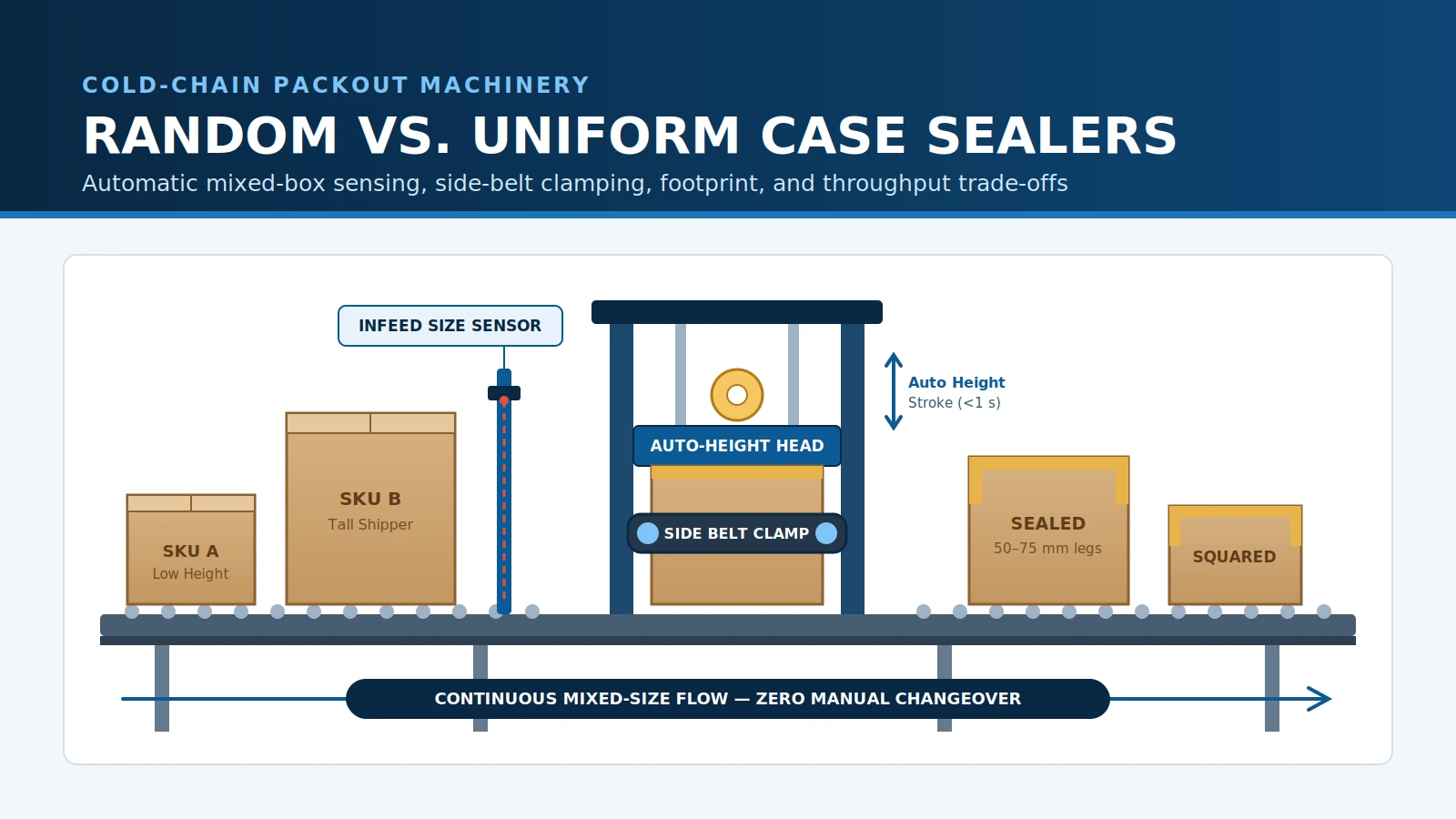
An automatic random case sealer adjusts by detecting incoming carton width and height through infeed photoelectric sensors, linear encoders, or external line signals, then actuating pneumatic cylinders or servo gantries under PLC and HMI control to close synchronized side belts and lower the upper sealing head in under one second.
Because each incoming thermal shipper can differ from the box directly ahead of it, the sealer executes a four-stage mechanical cycle on every carton:
- Infeed metering and sensing: An upstream separation zone meters one box at a time so photoelectric sensors or linear encoders—or external dimension signals from upstream packaging machines—register the incoming footprint before the box enters the sealing bridge.
- Synchronized side-belt clamping: Pneumatic or servo gantry linkages drive opposing side drive belts inward simultaneously in less than one second, centering the carton on the sealing axis and squaring its side walls.
- Automatic head positioning and flap closure: The upper mast descends to match the measured carton height, while fully automatic frames fold the top flaps cleanly ahead of the applicator.
- Closure application and reset: The tape head or hot-melt applicator seals the seam as the belts carry the box through compression, after which the guides and upper mast reset for the next random carton.
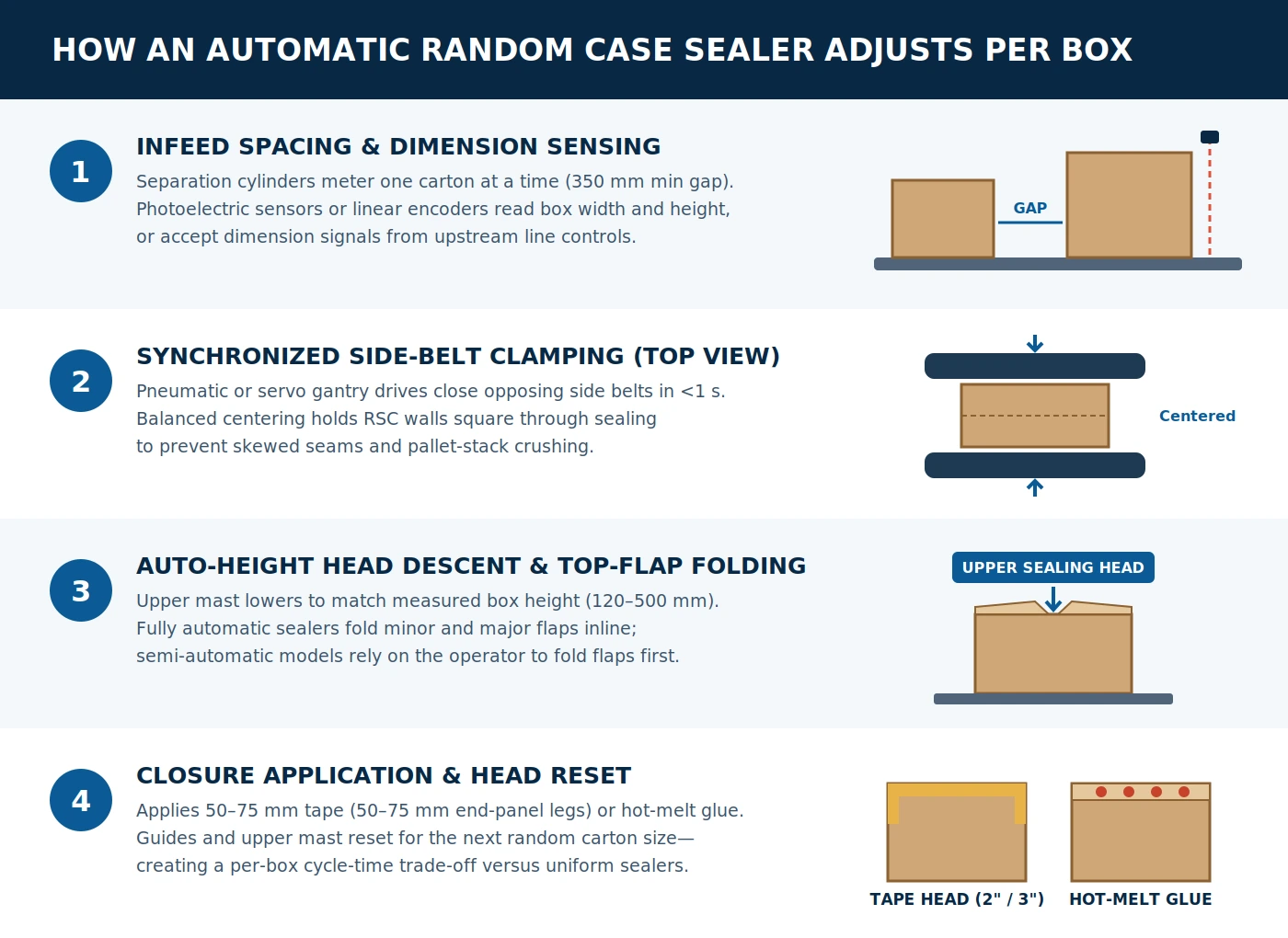
On industrial automatic frames such as the Lantech CS Random, this sensing and control architecture handles outside carton dimensions from 200 mm L x 150 mm W x 120 mm H up to 650 mm L x 510 mm W x 500 mm H while keeping the case square throughout sealing. Typical pneumatic air supply sits at 6 Bar (80 psi)—or 0.5 to 0.7 MPa on metric-specified random frames—to deliver repeatable clamping force without crushing loaded shippers.
When does a mixed-box line need a random case sealer instead of a uniform sealer?
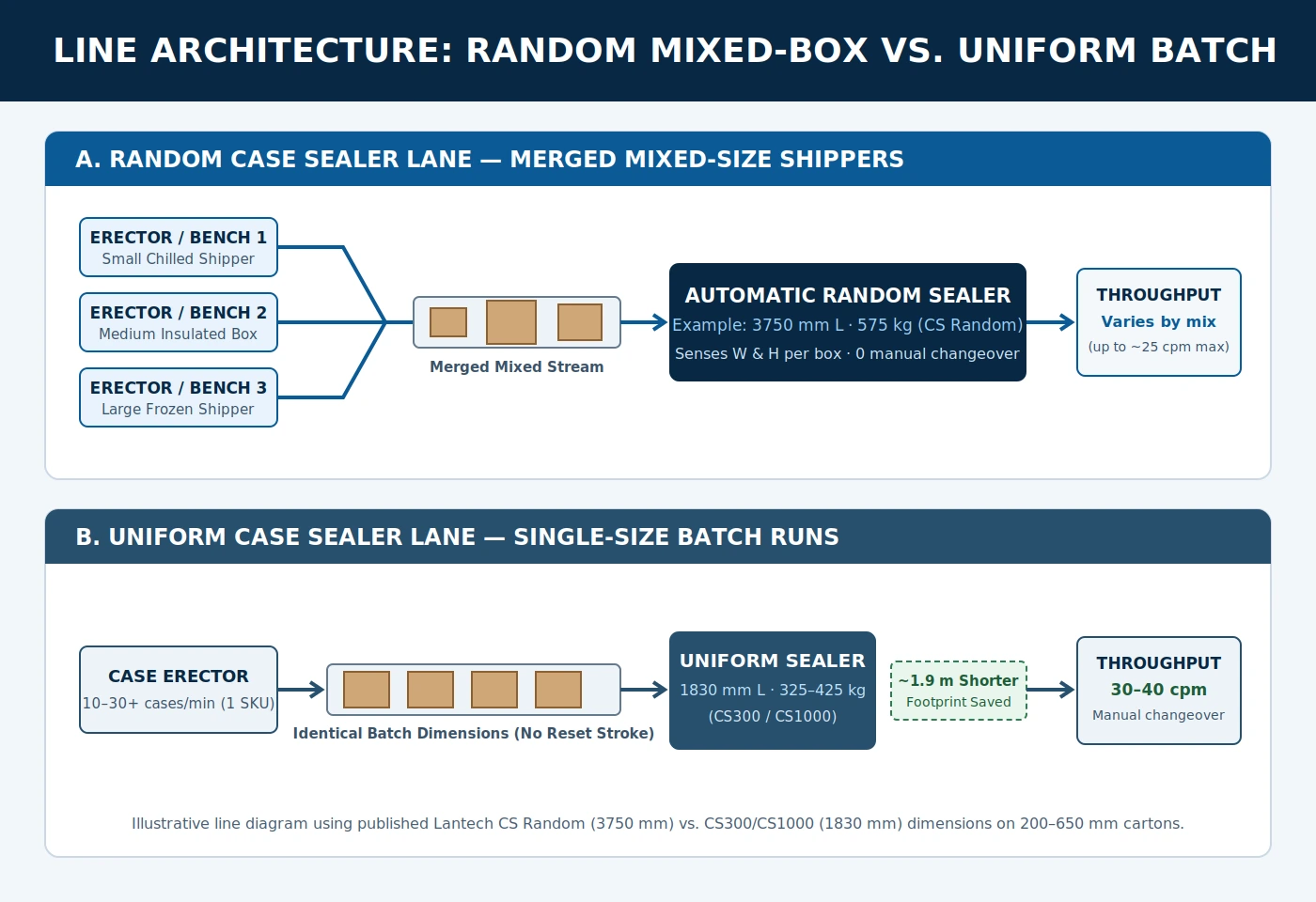
A packout line needs a random case sealer when multiple packing stations merge mixed shipper sizes unpredictably onto one conveyor and stopping to adjust guides would stall fulfillment. When one box size runs in sustained batches, an adjustable uniform sealer delivers higher speed in roughly half the machine length.
Comparing uniform and random models from the same OEM platform isolates the exact engineering trade-off. Both the uniform Lantech CS1000 and the automatic Lantech CS Random cover the identical carton range of 200 mm L x 150 mm W x 120 mm H minimum to 650 mm L x 510 mm W x 500 mm H maximum on 6 Bar (80 psi) service air. Yet adding automatic random sizing doubles overall machine length from 1830 mm to 3750 mm, increases machine weight from 425 kg (930 lbs) to approximately 575 kg (1265 lbs), and shifts throughput from a fixed rating of up to 30 cases per minute to a project-dependent rate governed by the actual box mix.
| Model (reference class) | Sizing & automation | Rated speed | Carton range (L x W x H) | Footprint / weight | Closure & utilities |
|---|---|---|---|---|---|
| Lantech CS Random | Random, fully automatic | Project-defined by box mix | 200 x 150 x 120 mm to 650 x 510 x 500 mm | 3750 x 1100 x 1800 mm; 575 kg (1265 lbs) | 50 mm (2 in) or 75 mm (3 in) tape only; 6 Bar (80 psi); 230V 3-phase 60Hz or 400V 50Hz |
| Lantech CS1000 | Uniform, fully automatic | Up to 30 cases/min | 200 x 150 x 120 mm to 650 x 510 x 500 mm | 1830 x 995 x 1800 mm; 425 kg (930 lbs) | 50 mm or 75 mm tape, or Robatech/Nordson hot melt; 6 Bar (80 psi); 400V 50Hz |
| Lantech CS300 | Uniform, fully automatic | Up to 30 cases/min (98% uptime) | 200 x 120 x 120 mm to 650 x 510 x 600 mm | 1830 x 885 x 1800 mm; 325 kg (716 lbs) | TH-Series tape; 6 Bar (80 psi); 400V 50Hz |
| Pearson CS25 Random | Random, fully automatic | Up to 25 cases/min | 8 to 24 in L x 5 to 16 in W x 4.5 to 18.5 in closed H | Industrial inline glue frame (Nordson unit) | Hot-melt glue; 0.064 standard cubic feet per cycle at 80 psi; 460V 3-phase 60Hz |
| Wexxar Bel 252 | Uniform, adjustable automatic | Up to 25 cases/min | 8 x 6 x 4 1/2 in to 22 x 15 x 16 in | Compact top-and-bottom tape frame | Tape heads; 0.1 CF/cycle at 80 to 90 P.S.I. (6 Bar) |
| 3M-Matic 700R | Random, semi-automatic | Operator-paced | 6 in L x 6 in W x 4.75 in H to unlimited L x 21.5 in W x 24.5 in H | Bench-height top/bottom belt taper (5 to 85 lbs box weight) | 2 in tape head; 115V single-phase |
| 3M-Matic 8000A | Uniform adjustable, operator-fed | Up to 40 cases/min (100 feet drive belt) | 6 x 4.5 x 3.75 in min; up to 85 lbs box weight | Operator folds flaps ahead of drive belts | 2 in top/bottom tape; single-phase |
Why peak speed misleads on mixed-size lines
A random case sealer’s maximum catalog rate assumes minimal height and width travel between consecutive cartons. When evaluating a random sealer for multi-SKU cold-chain fulfillment, measure the actual average throughput across real size transitions rather than relying on theoretical peak speed so upstream packout benches do not accumulate backed-up shippers. Conversely, placing a random sealer on a dedicated single-size batch lane adds unnecessary floor length and pneumatic cycling when an automatic uniform sealer such as the Lantech CS300 or CS1000 already handles up to 30 cases per minute.
When do you need a fully automatic random case sealer versus an operator-fed model?
Choose an operator-fed semi-automatic random sealer when a worker already stands at the packout bench to verify payload and fold top flaps before pushing cartons into the taper. Move to a fully automatic random sealer when merged conveyor lines run unattended and require inline top-flap folding and machine-to-machine communication.
On semi-automatic equipment, the operator fills the box at the machine entrance—whether bottom flaps were pre-sealed or not—closes the top flaps manually, and feeds the carton into the drive belts for automatic closure application. Representative semi-automatic random hardware such as the 3M-Matic 700R runs top and bottom belt drives with a 2-inch tape head on 115V single-phase electrical power, handling mixed cartons from 6 inches long by 6 inches wide by 4.75 inches high up to unlimited length, 21.5 inches wide, and 24.5 inches high across a 5 to 85 pound weight range. That simple single-phase utility footprint lets a cold-packout cell add mixed-box sealing without running 3-phase drops or plant compressed-air lines.
Fully automatic random case sealers remove the operator from the closing station altogether by automating infeed indexing, top-flap folding, dimension adjustment, and sealing. Machines in this class—such as the Lantech CS Random (230V 3-phase 60Hz or 400V 50Hz, 6 Bar / 80 psi air) and the Pearson CS25 random glue sealer (460V 3-phase 60Hz, 0.064 standard cubic feet per cycle at 80 psi)—communicate directly with upstream conveyors and line controls so multiple packing lines can merge continuously into one unattended sealer.
How does a random carton sealer index cases and fold top flaps cleanly?
A random carton sealer achieves clean top-flap folding by metering a controlled gap between incoming cartons, clamping and squaring the corrugated walls with opposing side belts, and guiding minor and major flaps down before wipe-down or compression locks the seal.
Three mechanical controls determine whether mixed-size RSC shippers close cleanly or jam at the flap folder:
- Infeed case separation: If two cartons touch nose-to-tail, the size sensor misreads length and the top-flap kicker can strike the following box. Industrial separation modules—such as Lantech’s infeed separation cylinders—enforce a minimum 350 mm gap between entering cases so each carton is scanned and folded individually.
- Square-case retention during sealing: Square cases pack, stack, and protect payload better than skewed boxes. Unsquared cartons become unstable on pallets and are more prone to crushing damage in transit. Synchronized side belts, or spring-loaded side belts on uniform frames such as the Lantech CS300, hold the box walls square while top flaps fold onto the score lines.
- Flap geometry and open-depth limits: Every automatic flap folder enforces minimum and maximum flap-length and depth windows. For instance, the Pearson CS25 specifies erected lengths of 8 to 24 inches, widths of 5 to 16 inches, open depths of 7 to 22.75 inches, closed depths of 4.5 to 18.5 inches, and flap lengths of 2.5 to 8 inches. Shippers with bulging insulated liners or oversized flaps outside those limits snag on the folding plows regardless of whether the frame is uniform or random.
Should a cold-packout random sealer use a tape head or hot-melt glue?
Select a tape head when you want simpler electrical utilities, quick cassette swap-outs, and compatibility across tape-only random frames; select dispensed hot-melt glue when high-volume mixed lines need rapid-setting fiber-tear bonds without tape-roll stops—provided the specific random chassis supports a glue unit.
Box-sealing tape heads on random sealers
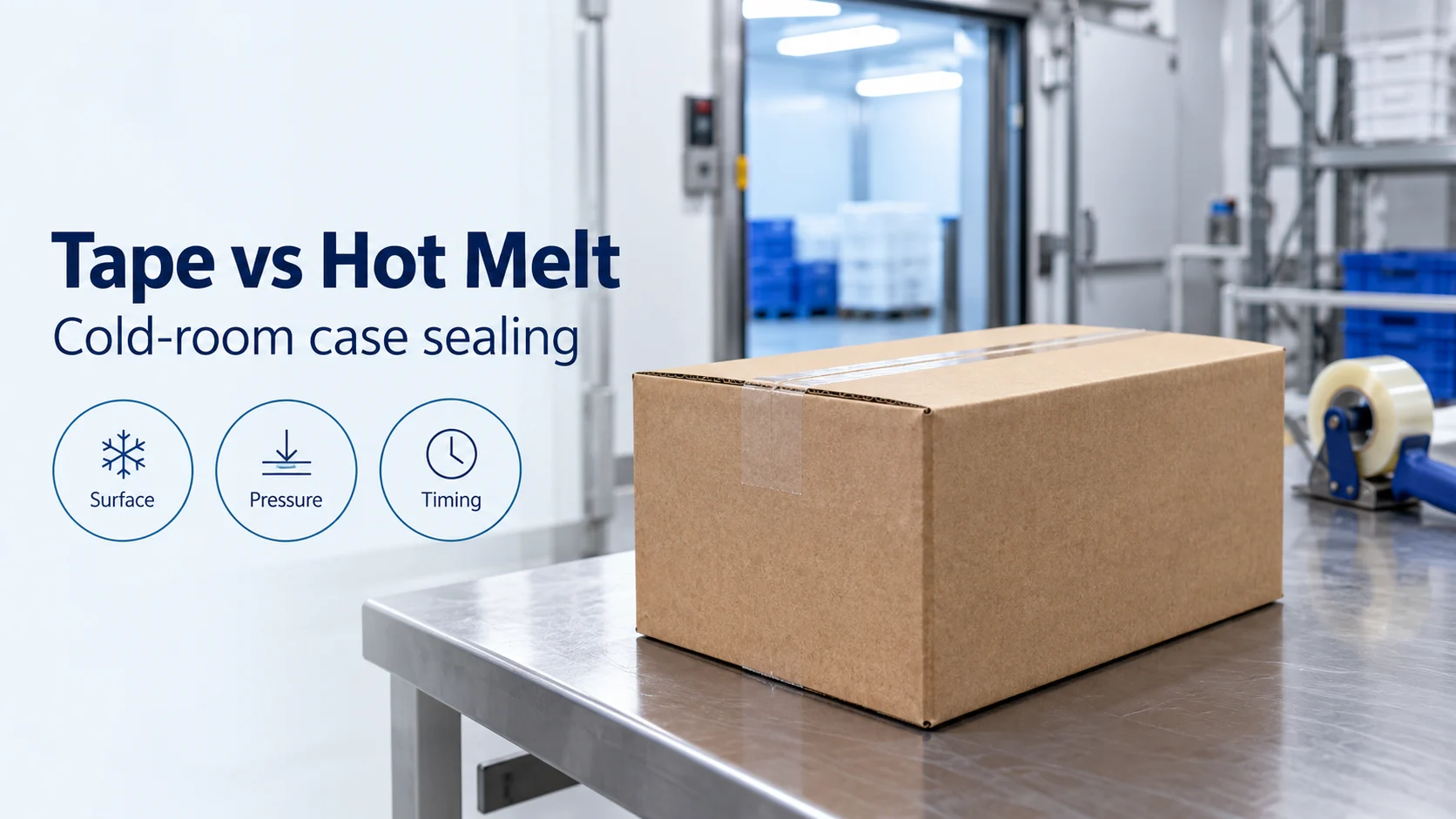
As noted in ASTM D1974/D1974M, how corrugated container flaps are closed affects overall material cost, labor costs, packaging equipment costs, and distribution performance. Box-sealing tape pairs a pressure-sensitive adhesive with an oriented polypropylene or polyester film backing engineered for strength in both machine and cross directions. Standard industrial widths include 48 mm and 50 mm (approximately 2 inches) alongside 36 mm (1.5 inches) and 72 mm to 75 mm (approximately 3 inches), with film caliper ranging from around 40 μm for low strength and 45 μm for normal strength up to 50 μm or more for extra strength. A standard single-strip center-seam closure extends 50 to 75 mm (2 to 3 inches) down the end panels, while a six-strip H-seal adds cross strips on the box ends for heavier reinforcement and contaminant exclusion. On the Lantech CS Random, a 50 mm (2-inch) TH-Series tape head is standard and a 75 mm (3-inch) tape head is optional, while hot melt is listed as not available on that model.
Dispensed hot-melt glue on random and uniform sealers
Industrial hot-melt adhesives close corrugated box flaps with zero drying or curing step, reduced or eliminated volatile organic compounds, and no layer-thickness shrinkage during solidification (whereas solvent-based adhesives can lose 50 to 70 percent of thickness). Hot melt solidifies within a few seconds to one minute, and metallocene-catalyzed polyolefin formulations provide a narrow molecular weight distribution with a correspondingly narrow melting temperature range. Open time—the working window during which the adhesive stays tacky enough to bond—spans only seconds for fast-setting hot melts compared with indefinite tack on pressure-sensitive tape. When specifying a glued random line, confirm chassis support early: the Pearson CS25 integrates a Nordson hot-melt unit for random cases up to 25 cases per minute, while Lantech offers Robatech or Nordson hot-melt sealing on its uniform CS1000 rather than the CS Random.
Cold-room frame construction and adhesive chemistry
Cold-storage and high-humidity food or pharmaceutical packout rooms frequently specify stainless steel sealer frames and components for washdown cleaning and corrosion resistance. For chilled cold-room packout lines where board condensation and cold preset threaten seal failure, pair this machine-selection decision with the dedicated cold-room tape versus hot-melt sealing guide to validate adhesive application temperature, wipe-down pressure, and open-time dwell on your actual board stock.
When should a case erector feed a random case sealer?
A standard automatic case erector should feed a random case sealer only as one of several dedicated upstream erectors merging different fixed box sizes onto a shared discharge conveyor, not as a single-magazine erector expected to switch blanks on every carton.
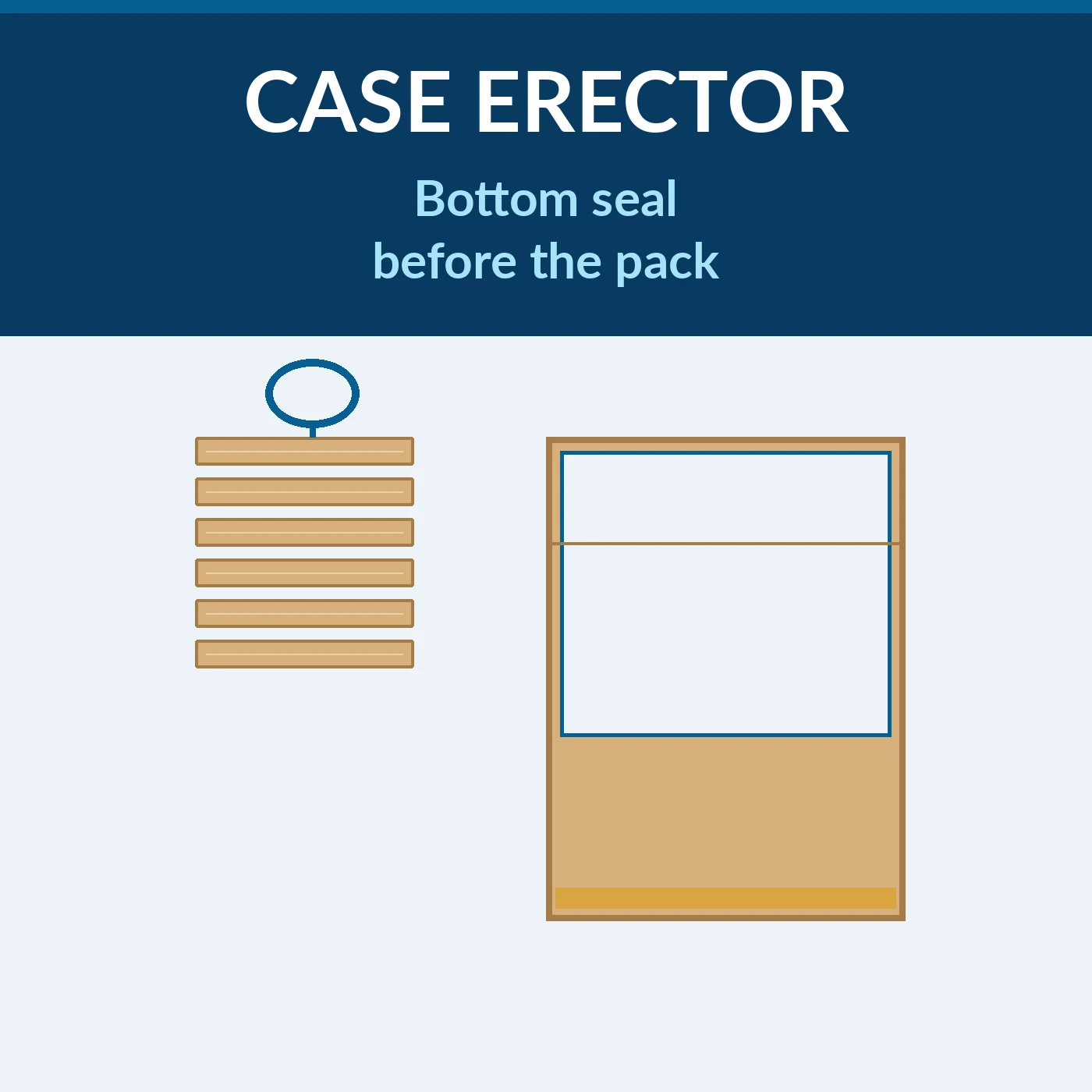
A case erector performs a separate upstream task from a case sealer: it pulls flat knocked-down corrugated blanks from a carton magazine using a vacuum picker, squares the blank in a forming unit, folds and seals only the bottom flaps, and transfers erected cases out via a sensor-equipped conveyor under PLC and HMI control at 10 to over 30 cases per minute. Because each carton magazine holds one blank size at a time, a single automatic erector naturally pairs with a single uniform sealer on single-SKU lines.
On multi-SKU cold-chain distribution floors, plants either place two or more dedicated uniform erectors (each feeding one shipper size into its own packout bench) upstream of a merge conveyor that feeds one automatic random case sealer, or run manual and semi-automatic forming benches feeding a semi-automatic random taper. Aligning carton erection, closure method, and handling protection follows the transport packaging design approach in ASTM D6198, which balances handling, storage, and shipping hazards against material, labor, and distribution economics. Review the case erector types and packout line fit guide to align blank conditioning and bottom sealing upstream, and map every handoff boundary—from carton preparation through final closure—using the cold-chain packaging equipment specification guide.
Specification checklist for mixed-box case sealing
Before requesting equipment quotes or scheduling factory acceptance trials, document six measurable boundaries for the sealing station:
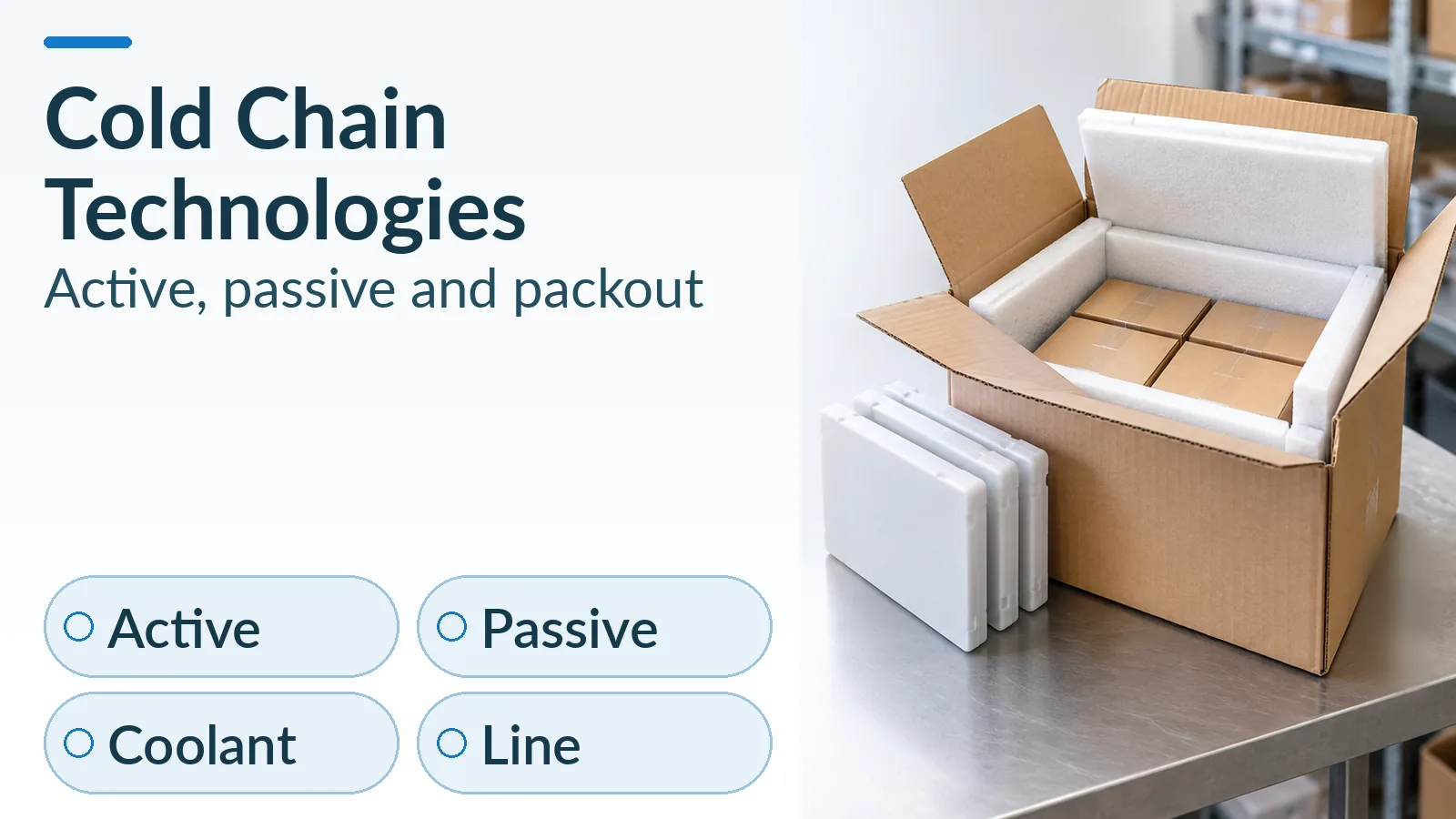
- Full carton dimension and weight envelope: Record minimum and maximum erected length, width, closed height, open height, flap length, and loaded box weight across every active and planned shipper SKU (including insulated liners and coolant packs).
- Real mixed-size throughput target: Time the required cases per minute across representative small-to-large box transitions rather than accepting an unloaded peak rating.
- Automation boundary: Confirm whether an operator will fold top flaps at a semi-automatic random station (single-phase 115V) or whether an unattended merged conveyor requires fully automatic flap folding, minimum 350 mm infeed gapping, and upstream PLC signal integration.
- Closure medium compatibility: Verify supported tape widths (48, 60, or 75 mm) and confirm whether your chosen random frame actually supports a hot-melt glue unit if glue is required. Match tape film thickness (40 μm low strength, 45 μm normal strength, or 50 μm and up for extra strength) to shipper weight and handling hazards.
- Floor space and plant utilities: Check line length for the longer random frame (for example, 3750 mm versus 1830 mm on comparable uniform units) alongside 6 Bar (80 psi) compressed-air flow and 3-phase voltage availability.
- Cold-room environment and inspection access: Specify stainless steel frame options for damp or chilled rooms and verify clear sightlines for seal inspection and stopped-line restart checks before releasing sealed shippers.