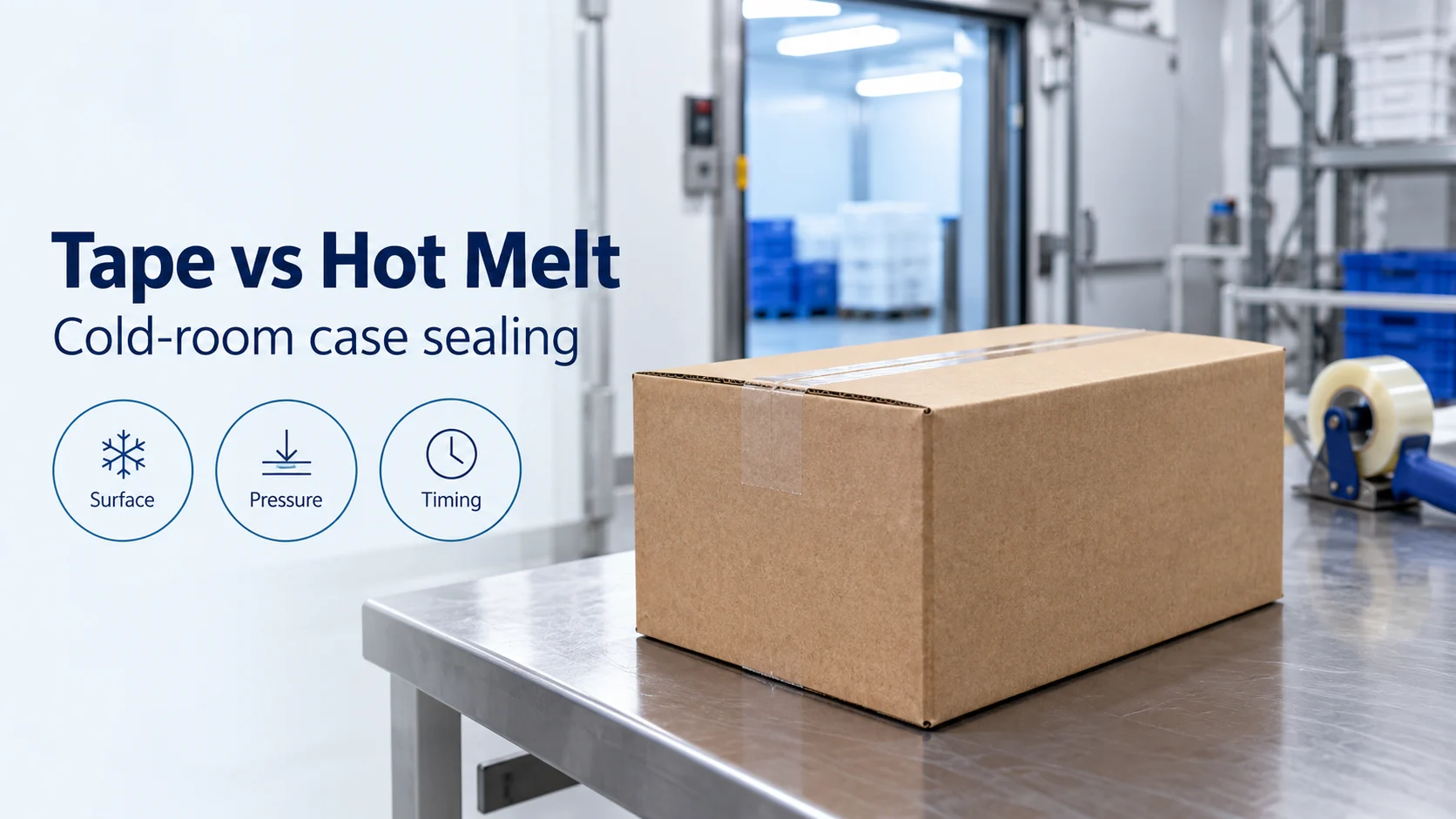
For a cold room case sealer tape vs hot melt decision, start with the sealing conditions and the failed joint. Check surface condition and tape pressure on the tape route; check adhesive timing and compression on the dispensed-glue route. Use the comparison below to organize the trial, then return to the cold-chain packaging machinery guide for the wider equipment brief.
Application temperature and service temperature describe different stages.
Compare the sealing routes at the joint
Keep the evaluation focused on the same questions: how does the bond form, what can go wrong, and what should the trial record?
| Decision point | Packaging tape | Dispensed hot-melt glue |
|---|---|---|
| Bond formation | Most packaging tapes require pressure to bond to the carton surface. | A mechanical bond forms as molten adhesive penetrates the surface, cools and solidifies. |
| Failure to investigate | Some tapes will not adhere to damp or dusty surfaces. | Preset occurs when the adhesive bead sets before the materials are compressed. |
| Pressure and release | Insufficient pressure may leave the tape adhesive incompletely engaged. | Removing compression while adhesive remains liquid may allow joint stresses to force the substrates apart. |
| Trial record | Record surface condition, applicator contact and carton support. | Record application-to-contact delay, compression duration and the opened joint. |
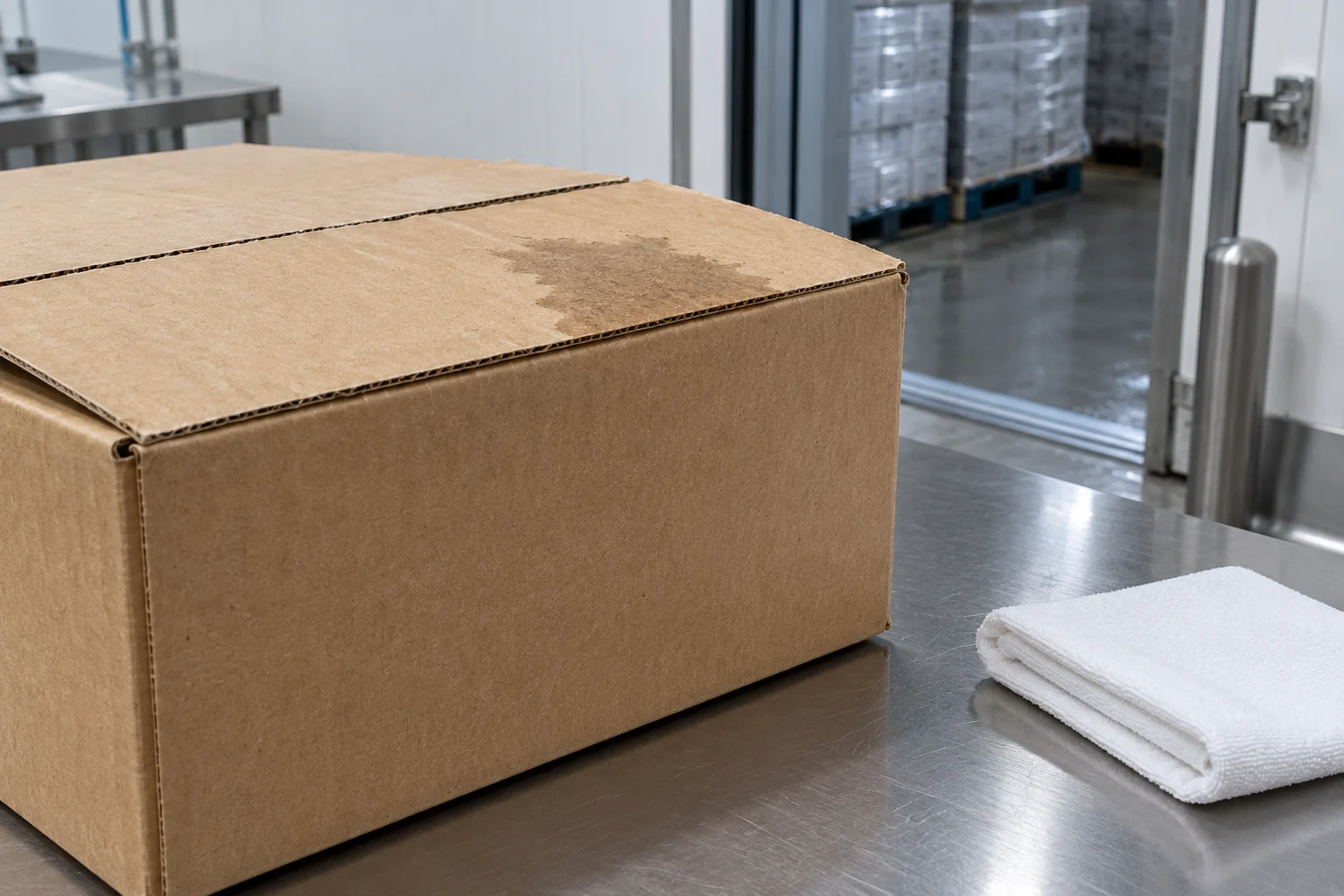
Condensation wipe: inspect the surface before sealing
Dew forms when temperature reaches the dewpoint.
Inspect the flap surface at the sealing position. If a cloth wipe is part of the proposed process, check the surface again immediately before adhesive application. Record visible moisture and dust separately; include the carton’s route into the sealing area in the trial notes.
Hot melt tapes may perform poorly in damp or humid environments.
Keep the tape assessment and the dispensed-glue assessment separate in the trial sheet. For freezer-grade packaging tape vs hot melt, request the exact adhesive grade and its application and service conditions before choosing the trial material.
Tape: check applicator pressure and carton support
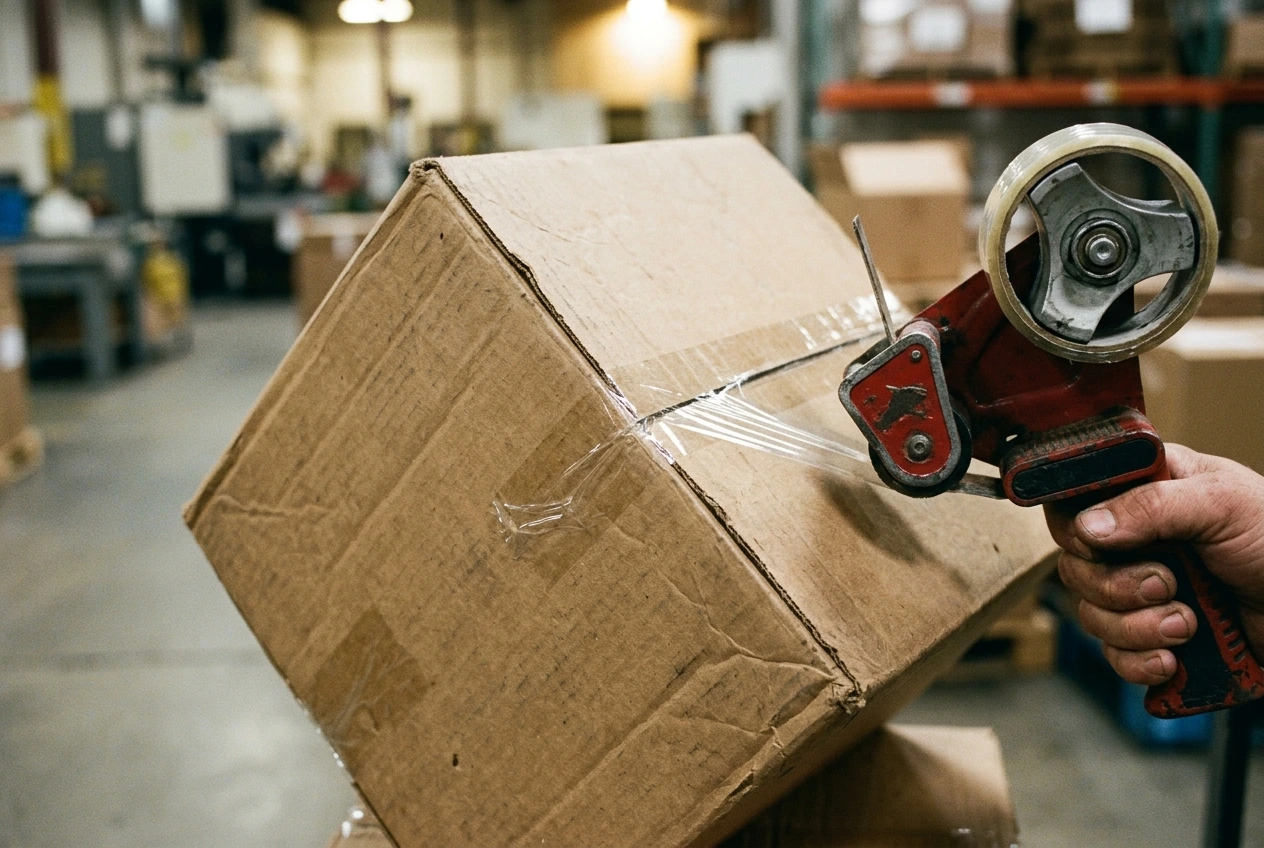
The tape applicator provides wipe-down pressure in automated packaging.
Under-filled cartons or cartons containing flexible packaging may provide insufficient resistance for proper wipe-down.
Follow the applicator contact across the intended tape path during the trial. Check the loaded case, including the flap area beneath the applicator. Record the carton fill and support arrangement alongside the tape identity so the trial can be repeated with the same packout.

Use the tape trial to answer these questions:
- What are the application conditions at the sealing station?
- What storage conditions follow sealing?
- Is the flap surface dry and clean at application?
- Where does the applicator contact the tape?
- What supports the flap beneath that contact?
Hot melt: distinguish open time from set speed
Open time is the time after application during which the adhesive remains molten enough to form a bond.
Set speed describes the time after application and compression at which the adhesive can produce a destructive bond.
Different adhesives develop bond strength at different rates.
Record adhesive application, flap contact and compression release as separate events. Include a stopped-line and restart observation in the trial plan. Compare the sequence with the selected adhesive’s process requirements.
Adhesive open time should match the process and conditions.
Colder temperatures can rapidly decrease adhesive set time.
Improper substrate temperature can cause adhesive to set too quickly.
When addressing a suspected hot-melt preset, check the adhesive temperature and tank pressure against the recommended operating ranges before preheating or conditioning the substrate.
If both the adhesive temperature and tank pressure are within the recommended operating ranges, preheating or conditioning the substrate prior to applying the adhesive is another option.
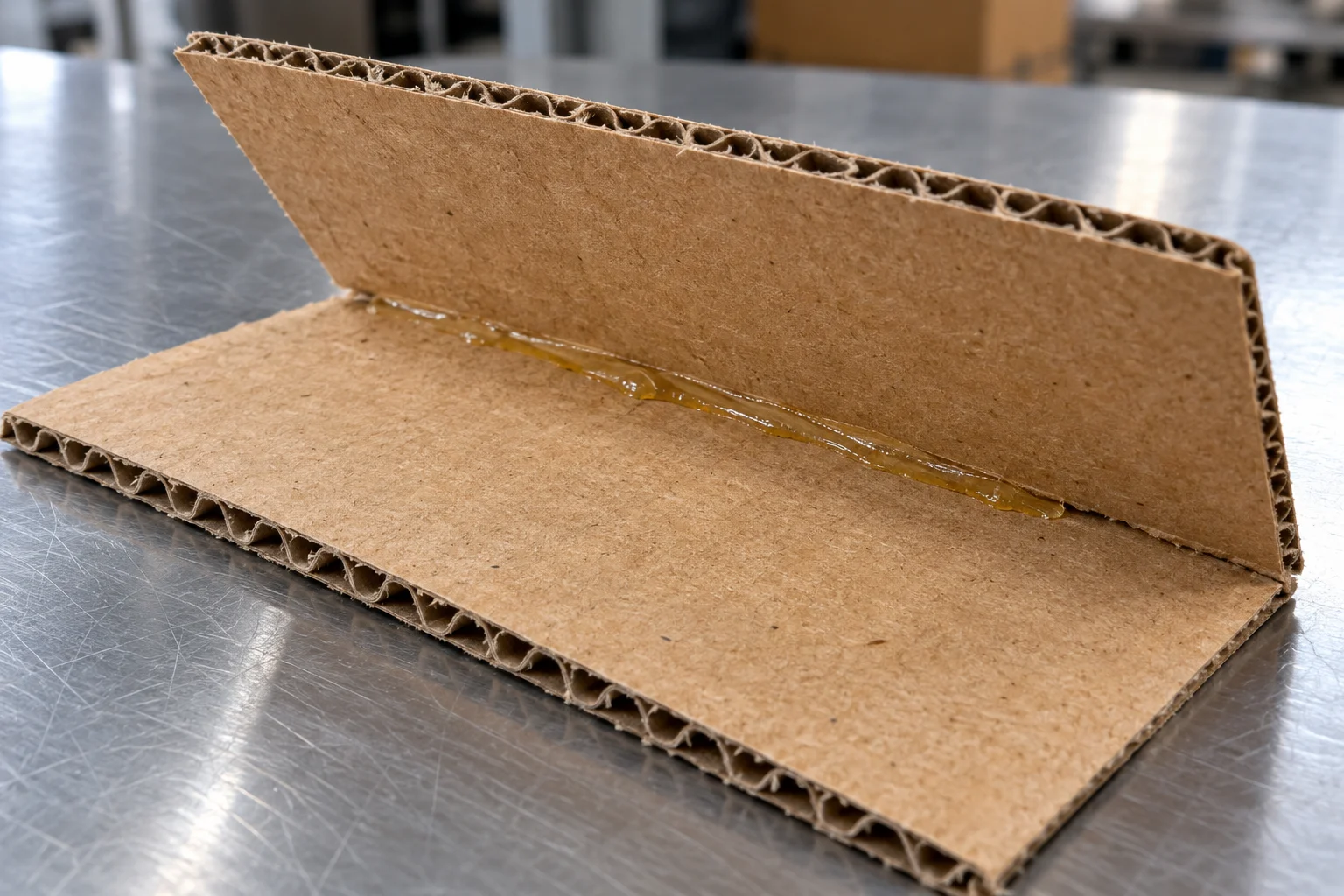
Flap pop-open prevention: separate the failure checks
Use the opened carton to organize the investigation. Keep the observation, suspected mechanism and proposed trial change in separate fields.
Check compression
Poor compression can cause hot-melt pop opens.
Uneven bead width is a possible sign of poor compression.
Photograph the adhesive contact area and record compression engagement and release. Repeat the observation after any adjustment, using the same carton and adhesive selection.
Check cold failure
For cold failure, fracture lines along the adhesive are a primary indicator.
Henkel recommends a freezer-grade adhesive for packages stored cold during shipment and sale.
Include the intended cold-storage exposure in the trial plan. Preserve the opened samples and link their inspection notes to the adhesive identity and sealing conditions.
Put the decision into a trial brief
Before selecting the closure route, assemble the following information for each candidate:
- Carton board, finish, flap geometry and filled packout.
- Tape or glue grade and the stated application and service conditions.
- Carton surface condition at sealing.
- Tape applicator contact and internal support observations.
- Glue application-to-contact delay and compression-release observations.
- Startup, stoppage, restart and post-storage inspection notes.
- Agreed acceptance criteria and responsibility for reviewing the samples.
Use those records to decide which route to carry forward. Put the chosen sealing sequence, inspection access and exception handling into the case-closing equipment specification.
Sources
- H.B. Fuller — Packaging Hot Melt Adhesives
- Henkel — Troubleshooting hot melt pop opens
- National Weather Service — Dew and Frost Development
- Shurtape — How does the manufacturing/packaging environment impact tape performance?
- Shurtape — What is wipe-down force and why does it matter in case sealing?
- Smithers — Hot Melt, Open Time and Setting Time