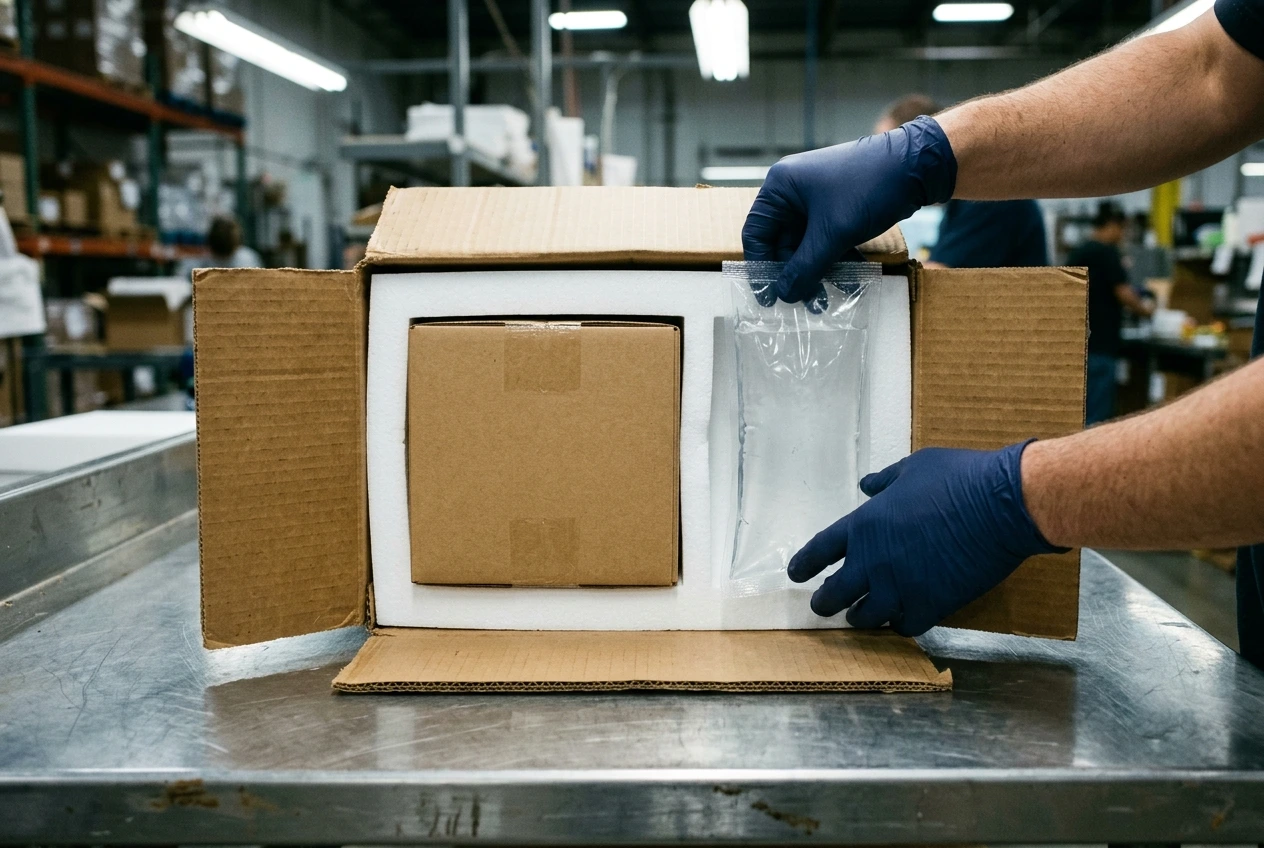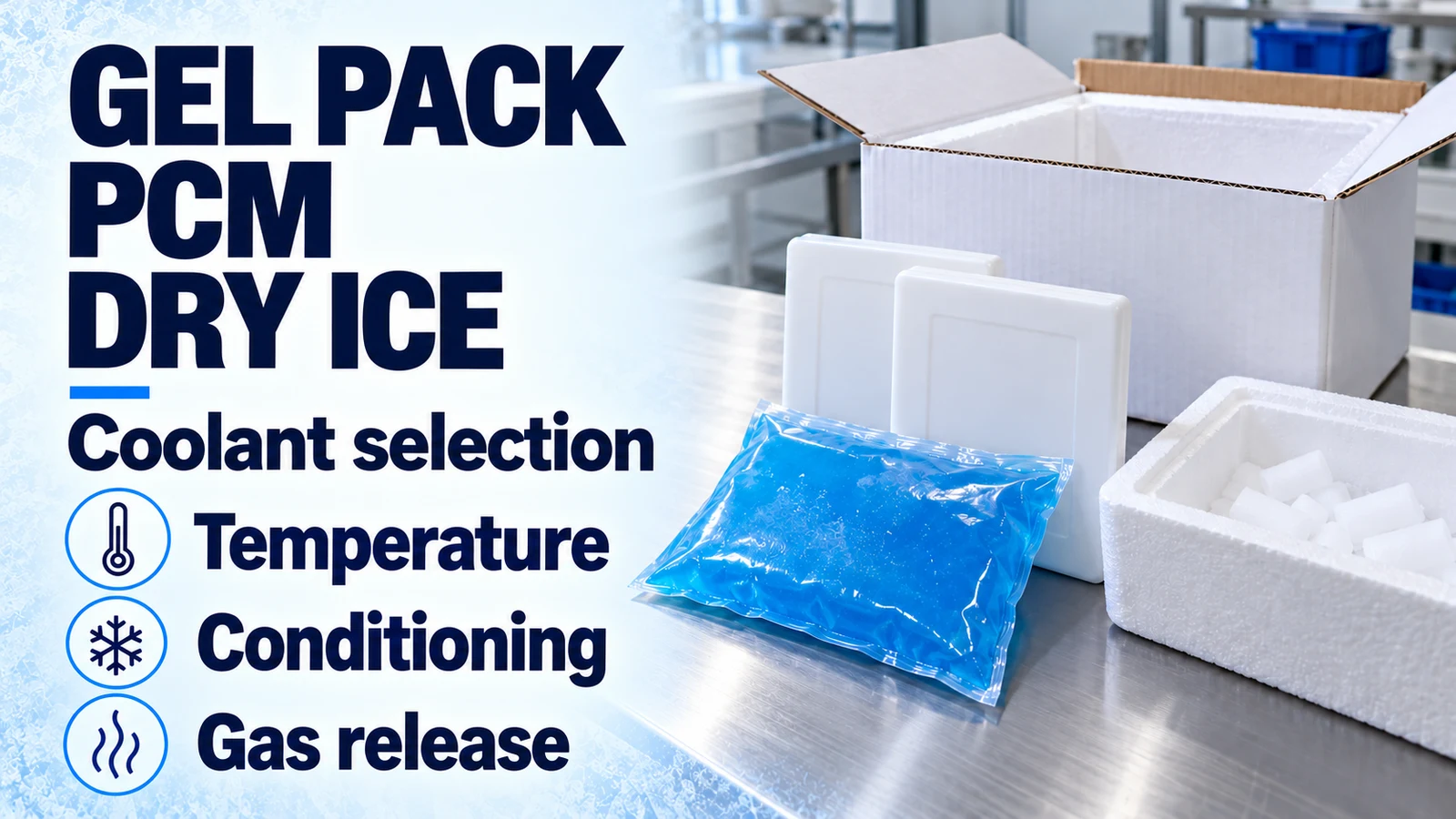
Choose between gel packs, PCM and dry ice by the cargo’s permitted temperature band and sensitivity to excessive cold. Ordinary water-based gel is a candidate for chilled packouts; a PCM formulation with a selected transition point offers another way to manage a defined band; dry ice requires cargo compatibility with much colder conditions and a package that releases gas.
For a gel pack vs PCM vs dry ice decision, start with the lowest and highest temperatures the product may experience. A refrigerated vaccine range of +2°C to +8°C, for example, makes protection against freezing a central requirement under CDC guidance. Then compare the coolant’s transition point, its condition when packed, and the complete shipper’s temperature performance. These are separate checks: a matching phase-change point helps screen a material, while qualification establishes whether the assembled packout protects the payload.
| Coolant family | Temperature reference | Candidate use | Dominant failure mode and prevention |
|---|---|---|---|
| Ordinary water-based gel | Representative PolarPack PP6 catalog value: 0°C | Chilled cargo with an established lower limit | Local overcooling from cold packs; use the approved conditioning and separation arrangement |
| Formulated set-point PCM | Representative formulations include +4°C, +20°C and −23°C | Refrigerated, controlled-ambient or frozen cargo, according to formulation | Wrong formulation or initial state; control the exact coolant SKU and conditioning instruction |
| Dry ice | −78.5°C at 1 atmosphere | Cargo and a qualified shipping system compatible with dry ice | Excessive cold and CO₂ pressure buildup; verify thermal protection and preserve gas release |
Component examples are from ThermoSafe’s Gel Packs and Bottles and PCM catalogs. The dry-ice reference is from the Compressed Gas Association’s Dry Ice Safety. Each temperature describes the cooling material; the payload limits come from the product specification.
Start with the permitted payload temperature band
The useful first comparison is between the product’s temperature limits and the packout options that can be evaluated against them. Record both bounds, including for frozen cargo, and identify whether the product has a specific prohibition on freezing.
The matrix below is a screening sequence. Its candidate pairings are engineering inferences from the material transition points; select the shipping configuration using complete-packout evidence for the intended journey.
| Payload requirement | Candidate to investigate | Deciding check |
|---|---|---|
| Refrigerated and freeze-sensitive; +2°C to +8°C is the vaccine example | A qualified packout using an appropriate set-point PCM, such as a +4°C formulation | Coldest payload temperature and compliance with the product’s transport instructions |
| Chilled, with a known lower limit | Ordinary water-based gel in an approved packout | Initial pack temperature, contact locations and the effect of separators |
| A product specified for +15°C to +25°C | A +20°C PCM formulation | Protection against both warming and cooling over the expected ambient exposure |
| Frozen, with specified upper and lower bounds | Subzero PCM or formulated gel, including −23°C formulations where suitable | Whether the full configuration maintains both product limits |
| Deep-frozen and specifically compatible with dry ice | A qualified dry-ice packout | Product compatibility, gas release and carrier acceptance |
CDC’s Storage and Handling of Immunobiologics establishes the refrigerated vaccine example. Apply the actual product label and stability requirements when selecting a band for food, medicines, specimens or other cargo.
A coolant’s transition point can sit outside the permitted payload band in an engineered system. Insulation, separation, starting temperatures and coolant placement influence the temperature at the product. The acceptance test therefore belongs at the payload, including locations most exposed to cold contact, throughout the required journey.
For the wider choice between powered temperature control and a passive thermal reserve, see active vs passive cold-chain packaging.
What do gel packs and engineered PCM actually control?
“Gel pack” describes a coolant format or formulation; “phase change material” describes thermal behavior. The categories overlap. In practice, the useful comparison is ordinary water-based gel against formulations designed to change phase at a selected temperature.
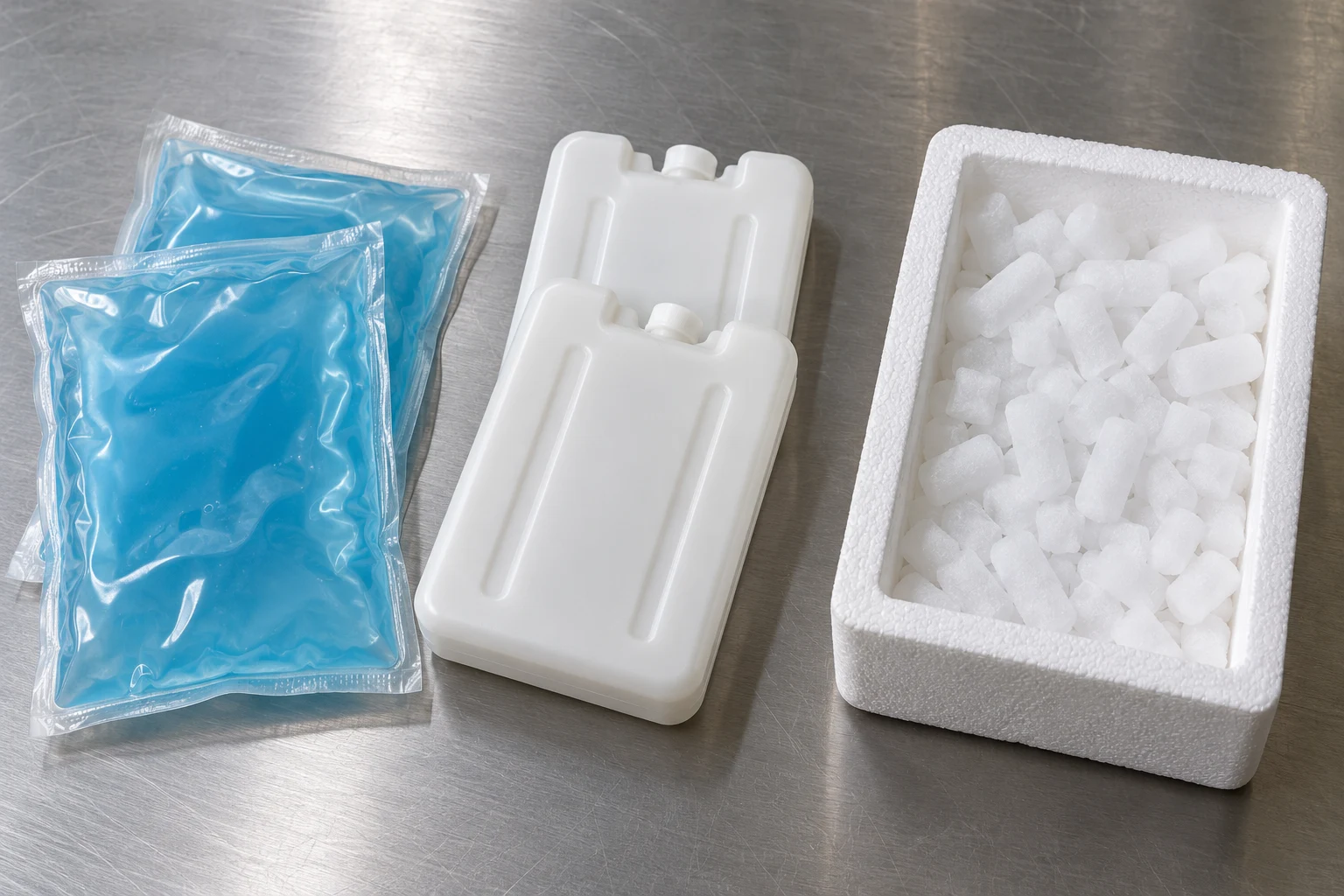
ThermoSafe’s PCM catalog illustrates the overlap: it includes U-tek gel packs alongside rigid PCM formats. Its Gel Packs and Bottles catalog provides a representative ordinary gel reference. The model-specific values are:
| Catalog component | Listed temperature | Selection meaning |
|---|---|---|
| Standard PolarPack PP6 gel pack | 0°C | A reference for an ordinary gel coolant near water’s freezing point |
| PCM Bottle B27A | +4°C | A refrigerated-band candidate to assess with the complete packout |
| PCM Brick TPB3020Y | +20°C | A controlled-ambient candidate when the payload specification supports that band |
| U-tek Gel Pack 429 | −1°C | A gel formulation can have a transition below 0°C |
| U-tek Gel Pack 427 | −23°C | Subzero formulations extend the gel/PCM choice into frozen applications |
These representative supplier catalog values identify formulations. Obtain the selected SKU’s current instructions when fixing the conditioning process and packout configuration.
During a solid-to-liquid transition, the material absorbs heat; during solidification, it releases heat. That thermal buffering occurs around the formulation’s transition temperature. A 0°C melting plateau provides no subzero phase-change plateau: if the product must remain below freezing, evaluate a suitable subzero formulation or a compatible dry-ice system against that requirement.
The starting condition matters as much as the formulation. A frozen pack can initially be colder than its melting point. A panel’s shape or surface condensation does not establish that its internal state meets the conditioning instruction. Keep the conditioning temperature, duration and release criterion tied to the chosen packout.
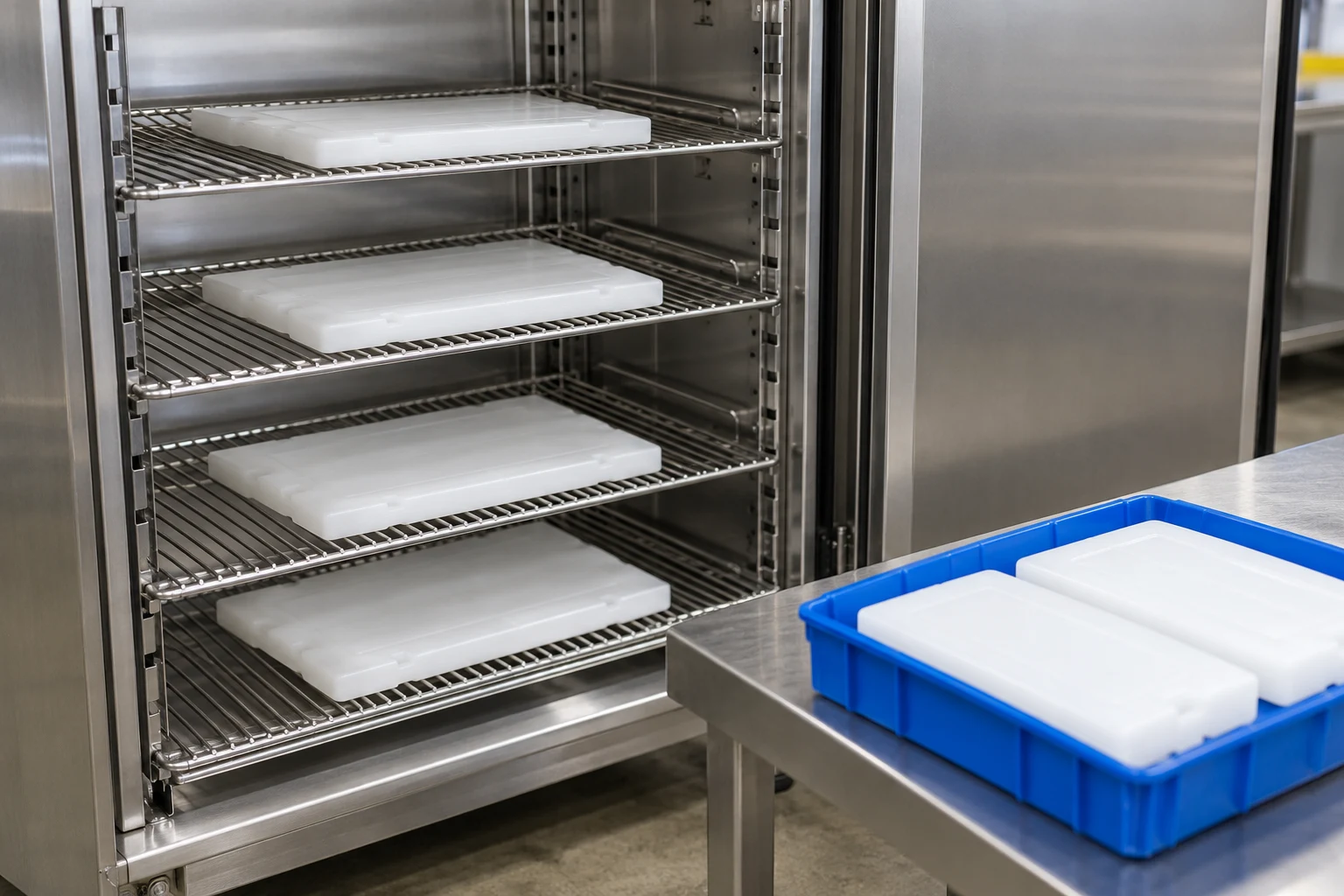
For refrigerated vaccine transport, CDC’s July 2026 Vaccine Storage and Handling Toolkit, printed page 29, discusses +4°C to +5°C PCMs and directs users to follow manufacturer instructions. In that transport context, it also warns against frozen gel packs, including packs that have been conditioned or appear to be sweating. A generic bench-warming routine is therefore an unsuitable substitute for the required vaccine transport system.
Dry ice needs thermal protection and a gas-release path
Dry ice introduces two distinct design questions: how the cargo is protected from excessive cold, and how the CO₂ produced by sublimation leaves the package. Passing one check does not resolve the other.
The Compressed Gas Association’s Dry Ice Safety gives a temperature of −78.5°C at 1 atmosphere. Sublimation converts the solid directly into gas. The material’s low temperature can suit compatible deep-frozen applications, while making direct cold exposure a central concern for more temperature-sensitive cargo.
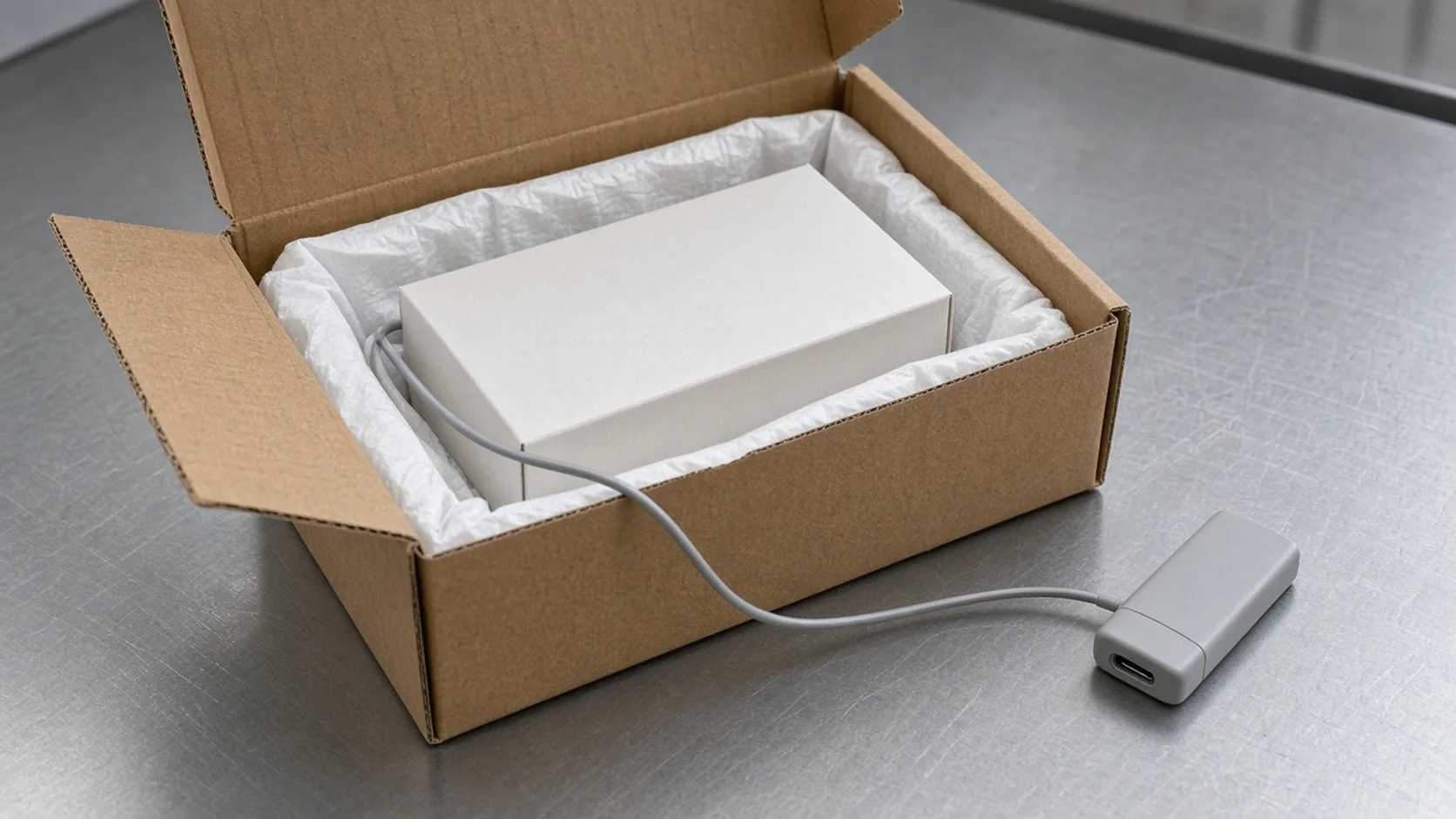
Retain the separator materials, coolant positions and closure arrangement specified for the qualified packout. A separator reduces thermal coupling between the coolant and product; its suitability depends on the complete arrangement. Verify the coldest payload locations when qualifying the system, particularly near coolant-facing surfaces.
For gas release, the FAA Dry Ice Fact Sheet says packaging must allow CO₂ to escape to prevent pressure buildup. Preserve the packaging system’s designed escape path when closing the liner and outer carton. Airtight containment conflicts with that requirement. For US air transport, arrange the shipment with the carrier and follow its additional packing instructions.
Package venting and workplace ventilation also serve different purposes. The first controls pressure inside the pack; the second addresses released gas in the surrounding area. CGA’s safety guidance calls for ventilated storage and handling and protection against direct cold contact. Include those handling conditions when deciding whether dry ice fits the operation.
Where does a lower-temperature excursion become freeze damage?
A permitted lower limit and a damage threshold answer different questions. The lower limit determines whether the product remained within its specified conditions. Damage assessment additionally depends on the product, the temperature reached and the exposure history.
Refrigerated vaccines provide a concrete case. Their +2°C to +8°C range makes a reading below +2°C an out-of-range event. CDC’s July 2026 toolkit, printed page 4, warns that a single exposure to 0°C or colder can completely destroy refrigerated vaccine potency. Its immunobiologics guidance specifically identifies permanent potency loss in liquid vaccines containing an aluminum adjuvant when exposed to freezing.
For a product with a +2°C lower limit, treat protection against cold excursions as an acceptance requirement even before the payload reaches 0°C. Set monitoring and response rules from the product’s approved instructions. For vaccine excursions, preserve the temperature record and consult the manufacturer or relevant public-health authority; visual appearance cannot establish viability.
Frozen cargo also has a lower boundary. CDC’s toolkit, printed page 31, warns against dry ice for frozen vaccine transport because temperatures can fall below −50°C. That example demonstrates why the word “frozen” alone is insufficient to approve a coolant. Use the current instructions for the particular product and transport system.
Turn coolant selection into a repeatable packout instruction
Release a coolant choice as a controlled configuration: formulation, conditioning, placement, separation, closure and monitoring belong in the same instruction. The packing station must reproduce the arrangement supported by the qualification evidence.
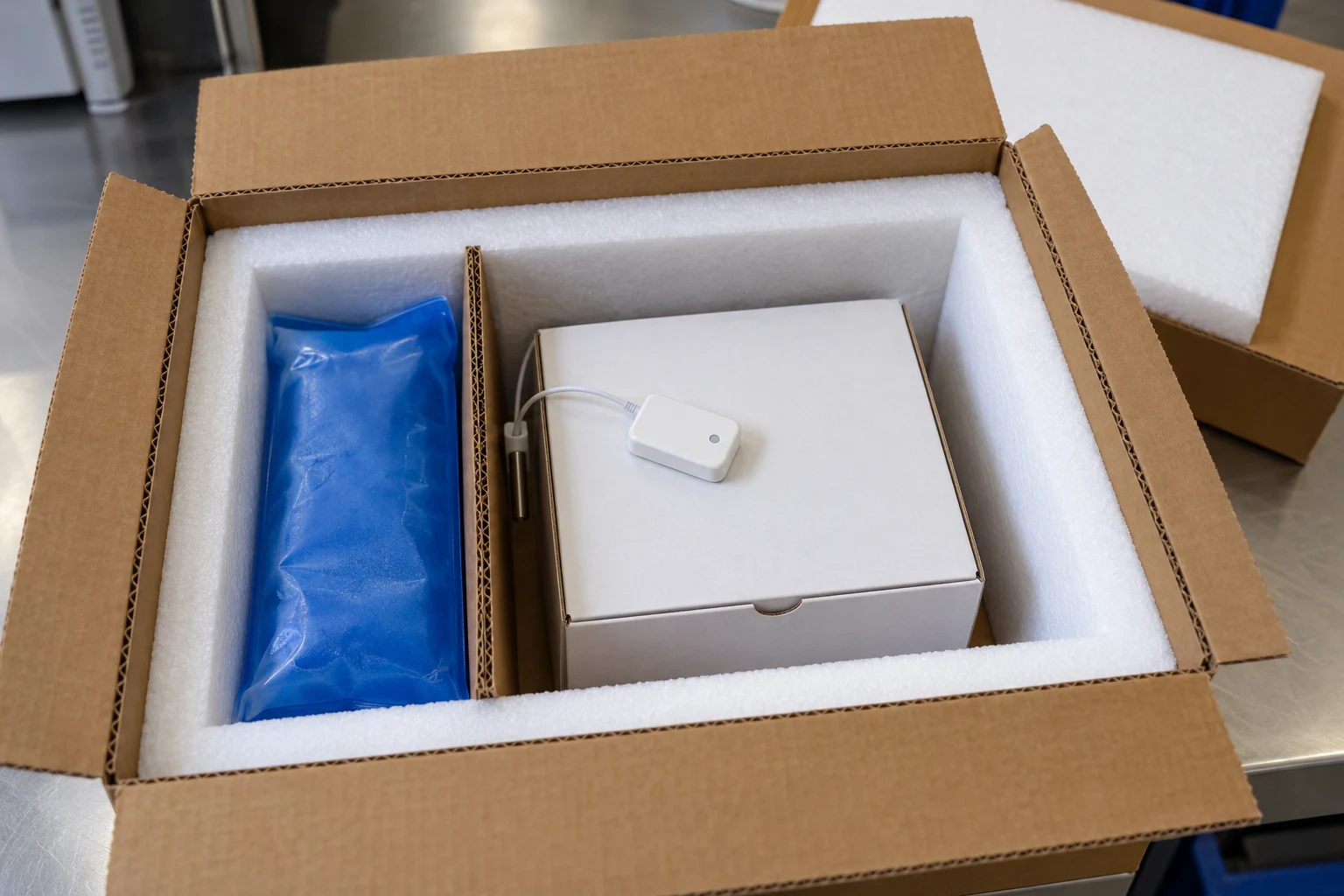
Record the following before handing the configuration to the packout automation process:
| Decision record | What the instruction should identify |
|---|---|
| Cargo limits | Permitted temperature band, freeze sensitivity and the product-specific excursion procedure |
| Coolant identity | Supplier, exact SKU/formulation and component revision |
| Conditioning | Required starting state, conditioning procedure and release criterion |
| Physical arrangement | Approved coolant quantity and positions, separator construction, payload arrangement and closure |
| Dry-ice controls, if used | Designed gas-release path, handling requirements and applicable carrier instructions |
| Monitoring | Device and probe positions, activation check and temperature-record ownership |
| Journey coverage | Expected transit time, delay allowance and ambient exposures covered by the qualification |
Transit time is a requirement to verify for the assembled shipper. Coolant family alone cannot establish how long the payload remains in range: insulation, starting conditions, payload and external exposure all affect the result. Use evidence for the intended configuration and journey before substituting another pack or changing its quantity.
Carry the approved configuration into the cold-chain packout checklist so the station checks identity, conditioning release and placement before closure. Keep the configuration revision with the shipment record to make substitutions and deviations traceable.
For the next coolant-selection discussion, bring the target temperature band, cargo temperature tolerance, transit time and carrier restrictions. Those inputs let the responsible packaging team narrow the formulation choice and define the complete-packout verification needed before release.