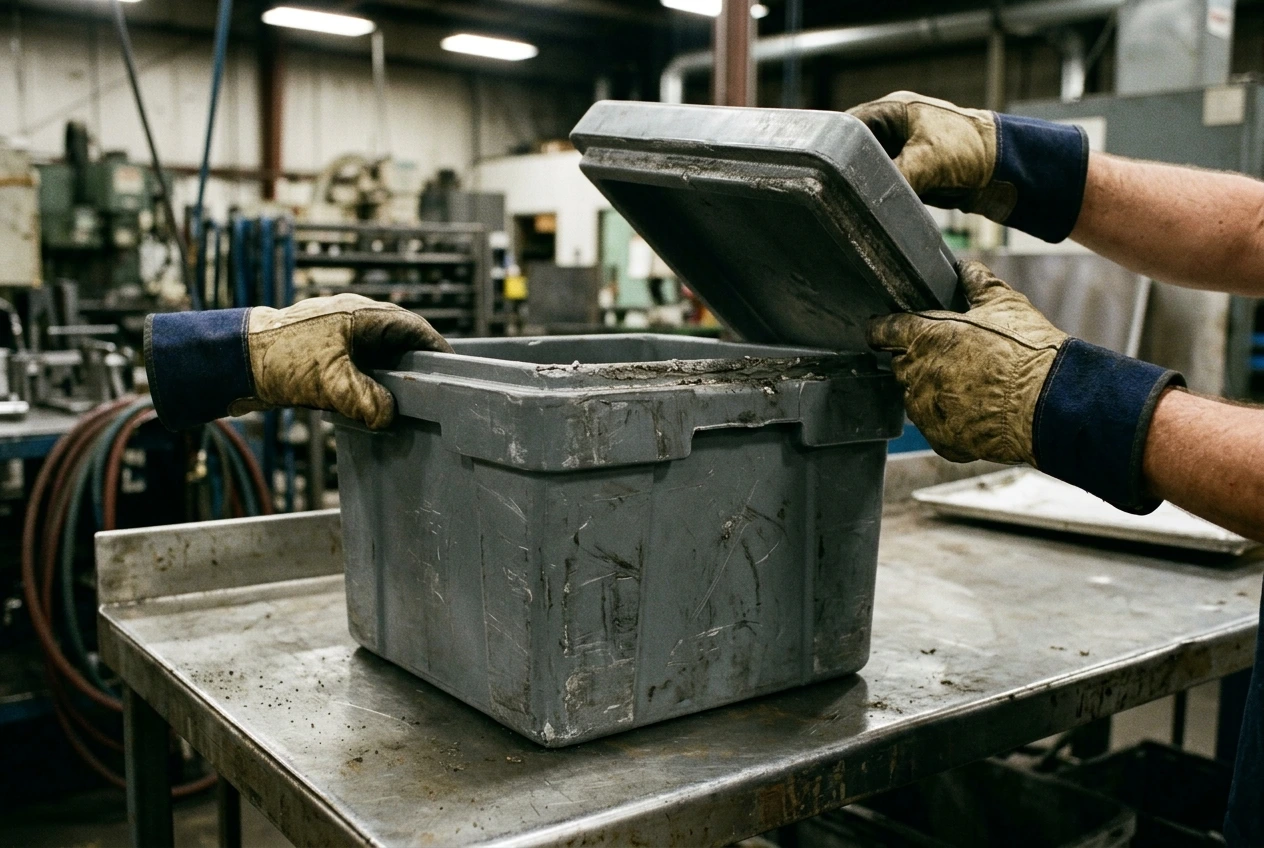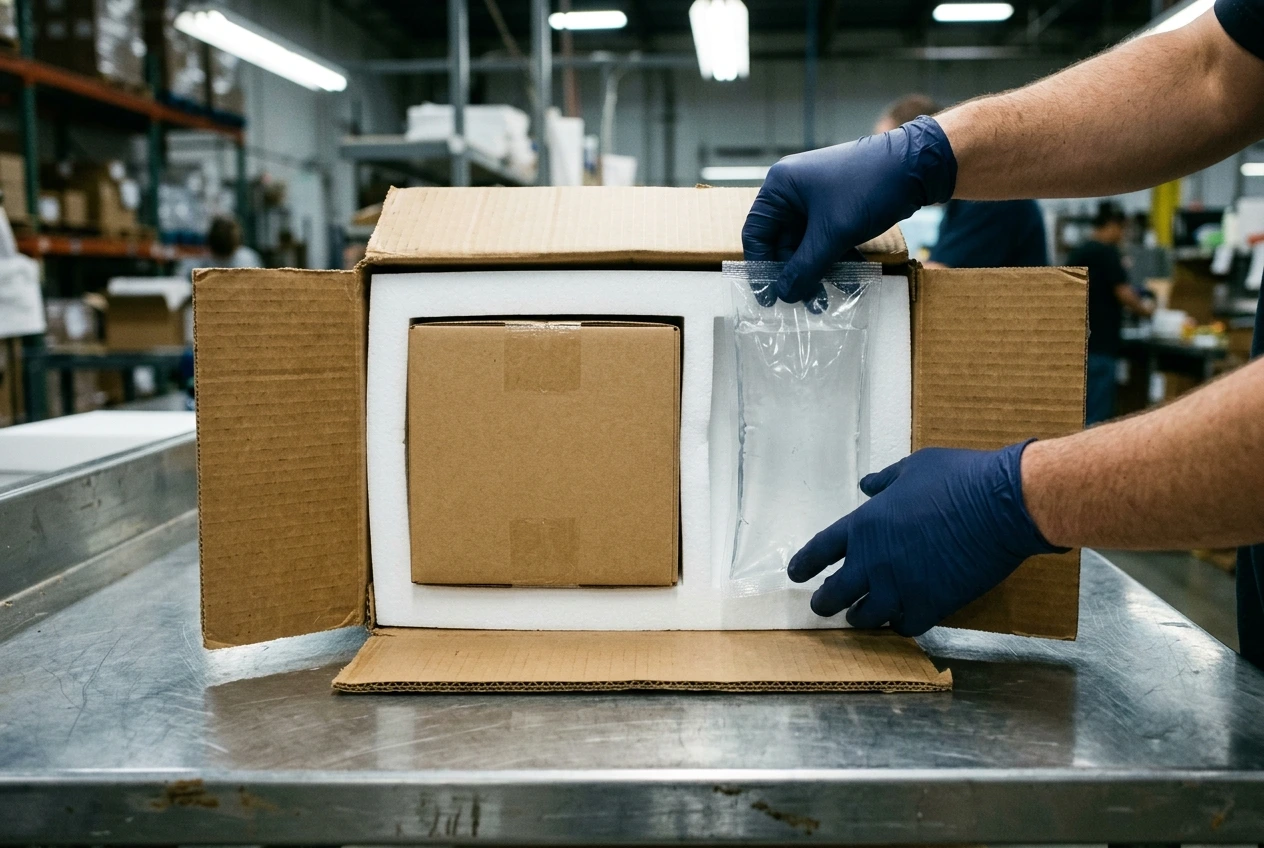
A packout can leave the bench looking complete while carrying the wrong configuration. Release the components first, assemble to the current packout instruction, and capture the checks before closing the case. Use this checklist to connect those decisions across a shift.
This guide belongs to packout automation. It covers the packaging station, not the temperature limits of a particular medicine or food. The shipment owner must supply those limits and the approved shipping configuration.
Before the first carton reaches the bench
Keep the packout revision beside the shipment selection, including the permitted payload range and the applicable seasonal configuration. Separate ready components from stock still awaiting inspection or conditioning. Physical separation makes a missing release easier to spot than a note on a crowded bench.
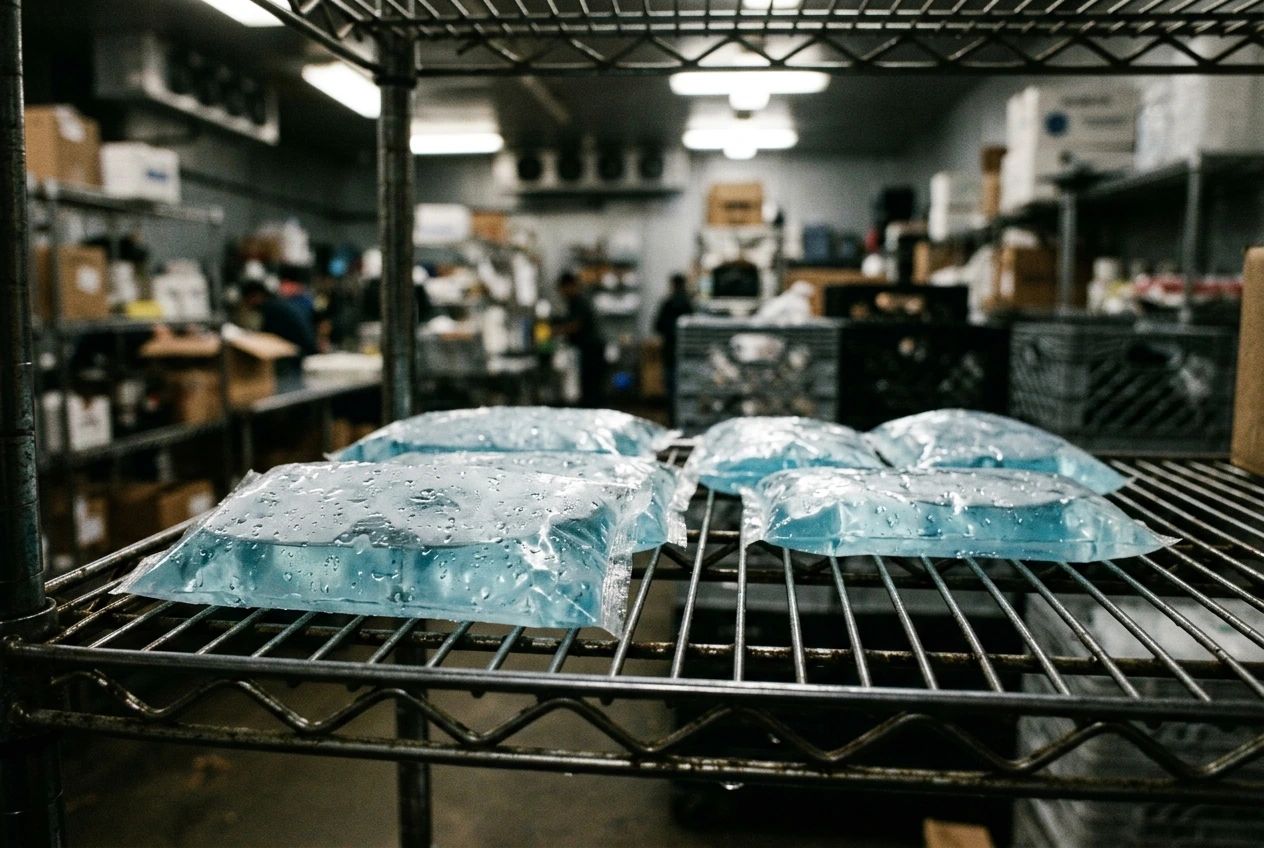
For coolant, use the selected system’s conditioning instruction. The Cold Chain Technologies evaluation guide discusses secondary conditioning as an additional preparation step for some systems. A frozen-looking pouch cannot establish that the required sequence is complete. Record the batch, preparation location and release evidence required by the actual procedure.
Walk the station in packing order
Copy the table into a batch record or shift sheet. The evidence column should identify a retrievable record, rather than a tick with no shipment association. Choose the actual limits from the approved instruction before using the sheet.
| Checkpoint | Operator checks | Evidence to retain | Hold the pack when |
|---|---|---|---|
| Configuration selection | Payload, route and season match the selected instruction | Shipment ID and packout revision | The approved combination is unclear |
| Components released | Correct liner, carton and coolant identity; preparation complete | Component lots and release reference | A substitute has no approval |
| Liner assembled | Corners, bottom and lid match the drawing | First-piece check and exceptions | A panel or fold is missing or damaged |
| Payload placed | Load and orientation match the instruction | Payload identity and configuration | Product displaces the required components |
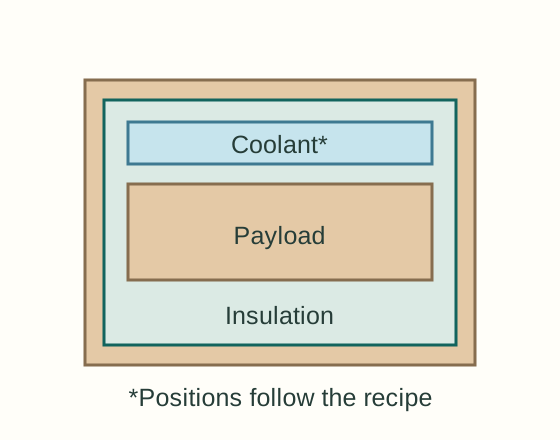
| Coolant placed | Type, count and position match the recipe | Packout check or controlled image record | Placement cannot be confirmed |
| Monitoring prepared | Device identity, activation and position match the plan | Logger ID and start confirmation | A required device is absent or unstarted |
| Closure complete | Inner closure finished before case sealing | Final check and dispatch handoff | Tape conceals an unresolved inner-pack issue |
An operator should be able to pause the process without mixing an unfinished pack with released output. Specify where that carton goes, how its status travels with it and who decides whether preparation must restart. Do not invent a general maximum bench time: obtain the allowed exposure from the system owner.
Inspect the inner closure before the tape goes on
Bring the liner’s intended lid or flap into position while the inside is still visible. Check that the payload and coolant have not forced the liner upward or trapped a flap. The carton should close in the approved shape without using tape to overcome an oversized internal pack.
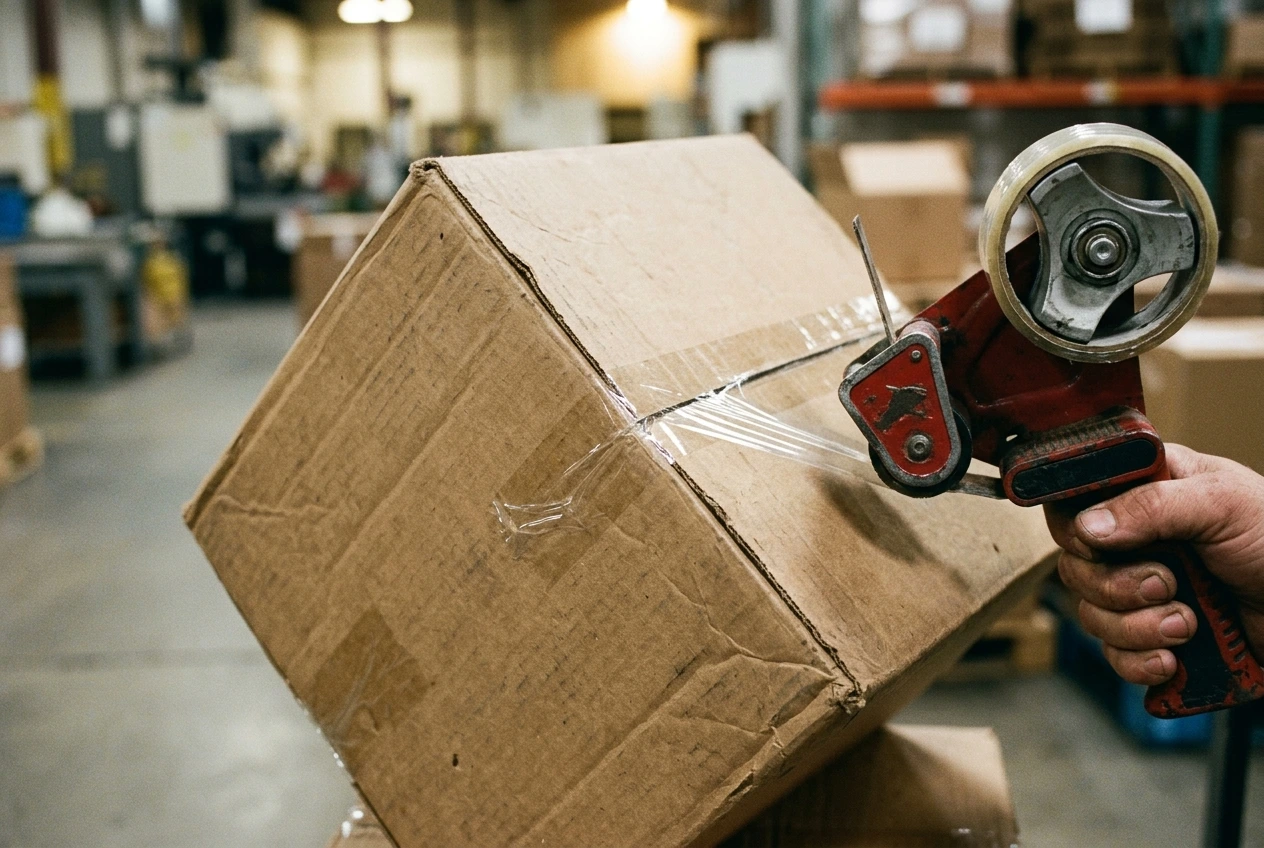
The photograph shows a case seam, which is only the outer closure. For an adhesive liner, inspect its own closure according to its supplier instruction before taping the carton. If an operator reopens the case, define which checks must be repeated and how the record is amended.
Close the record at dispatch
Connect the completed carton to the shipment ID and the carrier handoff. Record the actual handoff time if the process uses it to track exposure. A scan at the bench and a scan at dispatch answer different questions; keep both where the procedure calls for them.
Review exceptions at the end of the run. Repeated hesitation at coolant selection may call for clearer component presentation. A recurring fit problem belongs in the packaging specification review. Use the failure investigation table to trace those patterns, and the equipment boundary worksheet before automating the difficult step.
Method and sources
This is an editorial checklist built from source-described packout variables, not a qualified shipping recipe. Cold Chain Technologies’ Choosing the Right Passive Thermal Packaging Solution, especially its payload, monitoring and packout-simplicity sections, provides the technical basis. ThermoSafe’s qualification discussion explains why configuration selection must match the intended distribution conditions. Neither source establishes an acceptable temperature range or hold time for your product. No shipment testing was performed for this guide.