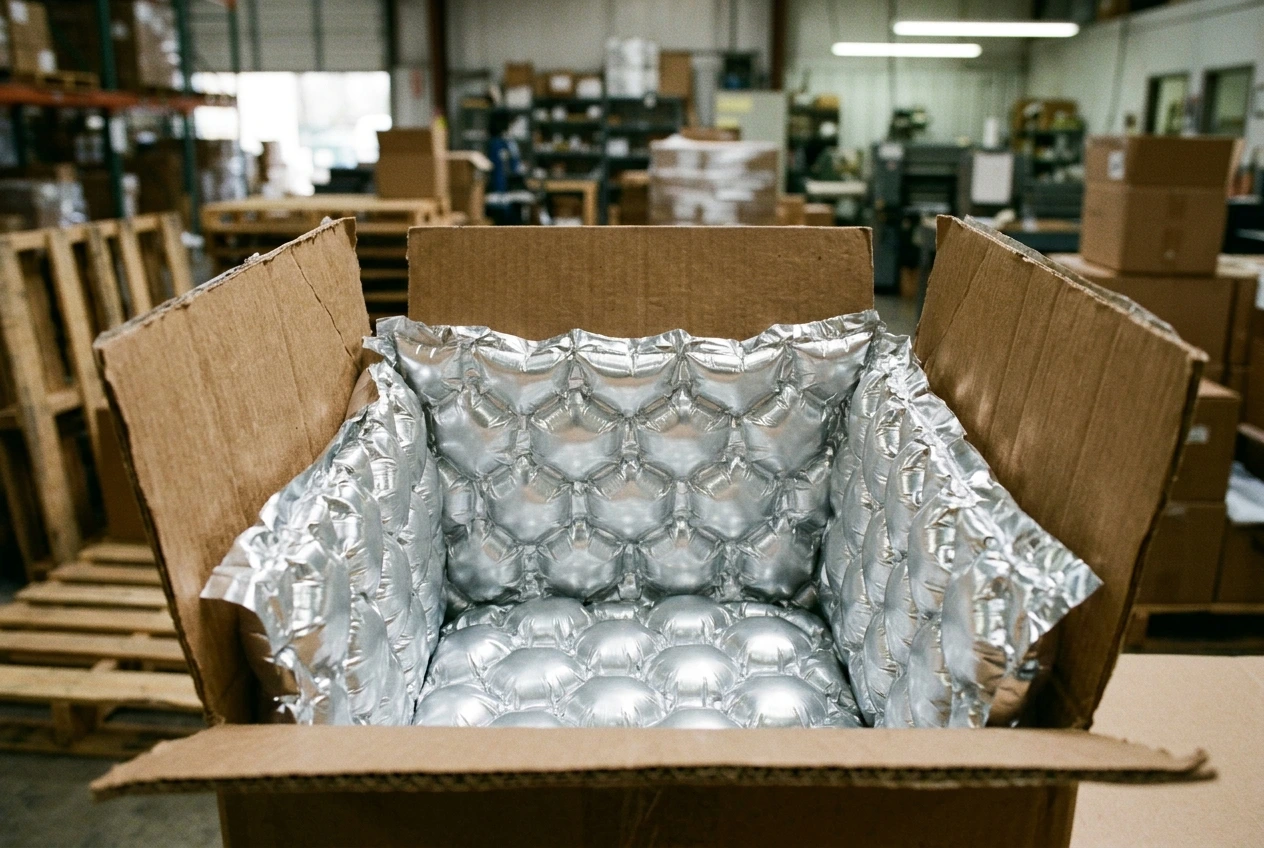
Payload rejection can follow a temperature excursion when temperature controlled packaging is changed after qualification. An ISTA 7D-based qualification can support the documented packaged-product configuration under its test conditions; it cannot establish performance for an untested insulation substitution or every shipping lane.
Temperature controlled packaging qualification connects an exact packout to defined temperature limits, exposure conditions and acceptance evidence. Read an ISTA 7D reference together with the procedure edition, payload, coolant preparation, insulation assembly and temperature records. Public ISTA text explains the scope and limitations of the test, while the complete procedure and report are needed to assess execution. For insulation selection, the useful evidence belongs to the assembled shipping system: a material name or liner appearance cannot supply the missing qualification basis.
Quick specs: identify what the qualification actually covers
The report should identify the complete configuration and its acceptance basis before its results are used to select an insulation layer.
| Input or item | Typical value or source | Why it matters |
|---|---|---|
| Product acceptance range | Product owner’s approved requirements; WHO Supplement 13, section 2.1.1 | Test temperatures need a product-specific acceptance basis |
| Procedure edition | Report identifier and controlled procedure; ISTA’s public store lists 7D (07-22) | An older public overview cannot establish all instructions in a later edition |
| Payload boundaries | Minimum and maximum representative loads; WHO section 2.1 | Thermal mass and loading arrangement can change temperature response |
| Packout identity | Insulation, coolant, conditioning, component positions and closure | A component substitution changes the evidence boundary |
| Exposure and duration | Selected profile in the full procedure and report; actual route assessment | The profile name alone does not show the complete exposure history |
| Measurement basis | Sensor locations, calibration records and approved decision rule | A central air reading alone may miss a payload temperature extreme |
This guide supports the evidence decision within inflatable insulation. The liner assembly guide covers identifying and preparing the material; qualification determines what performance evidence applies after that assembly is defined.
What the public ISTA 7D overview actually says
The public 7D overview describes a development test of packaged-product response to external temperature exposure. It treats product and package together and excludes assessment of shock, vibration and compression protection.
Its caution is material to insulation selection: the profiles are general simulations, are not intended to represent worst-case exposure, and are not based on current data-based research. It encourages consideration of ISTA 7E. Those statements do not establish that either profile matches a particular lane.
The overview carries 2007 identification and a January 2013 editorial-change date. The public store listing identifies Procedure 7D (07-22). The full later edition and its profile tables require access; this guide provides no cycle temperatures, dwell times or profile tolerances from that unavailable text. Obtain the edition named in the report before checking conformance.
Qualification needs a complete packout and a defined use
A complete-system qualification links the materials to their preparation, payload and expected distribution conditions. WHO’s Qualification of shipping containers, sections 2.1–2.1.3, distinguishes laboratory design and operational qualification from performance qualification in the operating environment.
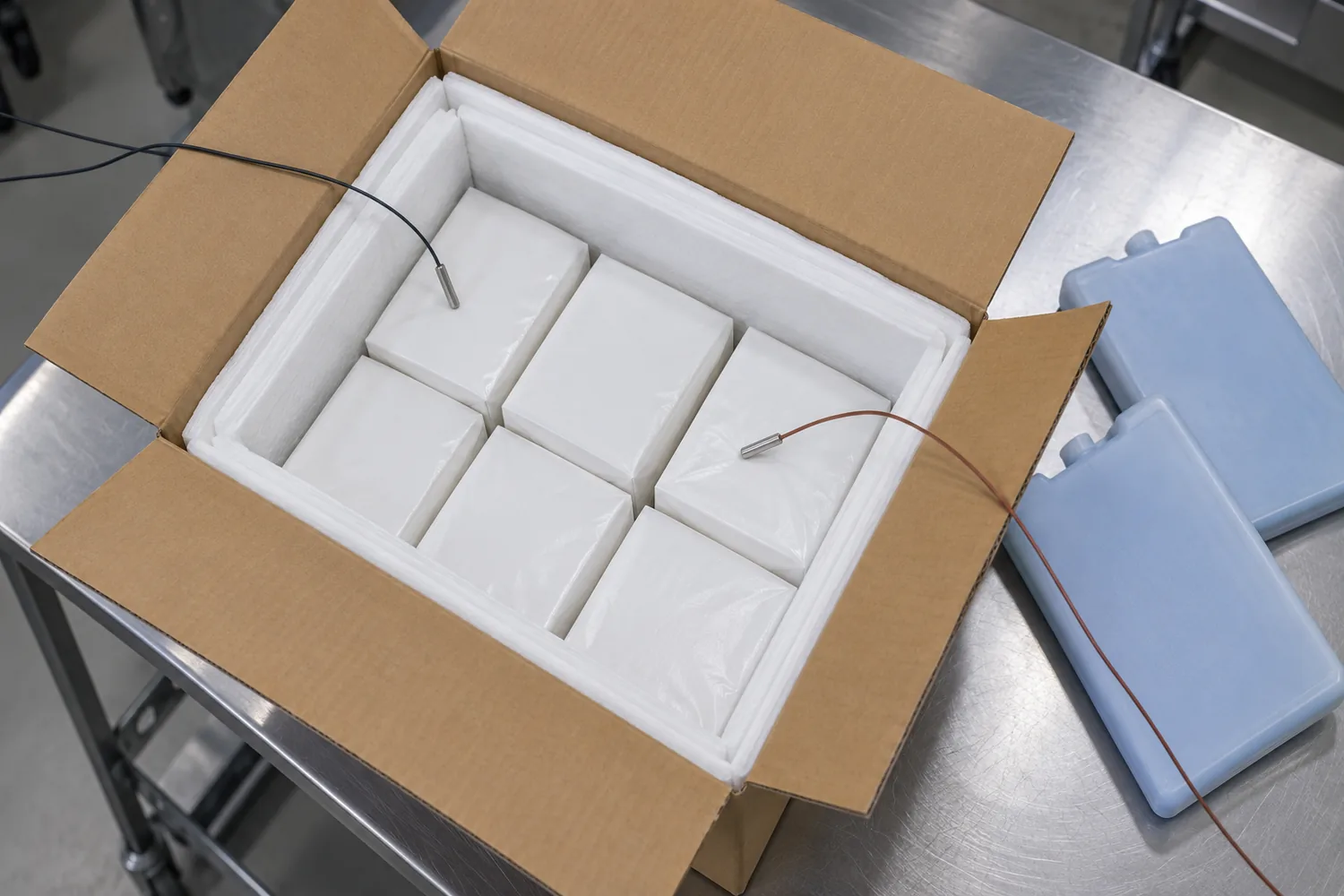
For a report review, connect each result to an assembly revision, the conditioned state of coolant and product, payload boundaries, sensor positions and the required exposure window. Check actual shipping conditions separately from chamber performance. A successful chamber run supplies bounded thermal evidence; operational use adds handling, timing and route variation.
WHO section 2.1.2 places a strict boundary on relying on a supplier’s prequalified operational qualification report: the design and packaging must remain unchanged and the documented performance must meet the user’s requirements. Modifications require operational qualification under that guidance. This is particularly relevant when a reflective liner is proposed as a substitute for a qualified rigid or vacuum-insulated assembly.
Compare evidence before comparing insulation layers
The strongest insulation evidence identifies the entire configuration in which the layer performed. A material datasheet remains useful for construction and handling, but it leaves the shipment-level temperature claim unresolved.
| Evidence offered | Decision it can support | Evidence still needed | Dominant Failure Mode & Prevention |
|---|---|---|---|
| Material datasheet or cushioning demonstration | Identify construction, preparation and mechanical function within the documented scope | Complete thermal packout and relevant exposure results | Cushioning evidence mistaken for temperature protection: keep material properties separate from shipment qualification |
| Complete-pack thermal report | Assess the named insulation, coolant and payload against the reported conditions | Match to actual operating requirements, edition and route | Assembly differs from the tested build: control component identity, seams, lid and coolant positions |
| Supplier prequalified-system report | Assess an unchanged system against user requirements | Exact configuration match and applicable operational evidence | A liner substitution inherits the old claim: review the change and qualify the modified configuration |
| Field temperature records | Assess performance on the represented journeys and conditions | Coverage of relevant payload and environmental variation | Limited routes treated as universal: define the scope of the field evidence and investigate excursions |
Peli BioThermal’s Crēdo Cube documentation illustrates why system identity matters: its passive construction combines PCM with VIPs. Its claims do not transfer to an unrelated air-cell liner. A foil surface, air chamber or nominal thickness alone cannot establish an equivalent complete-pack result.
Screen temperature headroom before reducing insulation
A conservative measurement screen compares the closest approach to a temperature limit with the uncertainty allowed by the approved measurement decision rule. It helps identify results that need closer review before a design is changed.
Formula: G = min(T_min − T_low, T_high − T_max) − U
T_low and T_high are the approved product limits; T_min and T_max are the lowest and highest relevant payload readings over the assessed interval; U is the documented measurement uncertainty allowance selected for this screening rule. G is the remaining guarded temperature headroom, in °C. Instrument accuracy alone does not necessarily establish U.
Worked example — all inputs are illustrative assumptions, not measurements or a test result: assume product limits T_low = 2°C, T_high = 8°C, hypothetical extremes T_min = 3°C, T_max = 7°C, and an assumed uncertainty allowance U = 0.5°C. Then G = min(3 − 2, 8 − 7) − 0.5 = 0.5°C. This is a temperature margin under a chosen screening rule, not extra shipping time or proof that insulation can be removed.
Rules-of-Thumb: If the nearest temperature-limit clearance is less than U under a product requirement allowing no excursions → choose a guarded acceptance review before approving a thinner insulation layer, because measurement uncertainty can overlap the permitted boundary. Apply the approved protocol’s decision rule; this editorial screen is not an ISTA 7D pass/fail requirement.
Even positive guarded headroom leaves the proposed thinner layer unqualified. Heat paths through seams, closure and the payload arrangement can change when the complete pack is altered.
Keep the report usable at the packing station
Qualification evidence becomes operationally useful when the approved assembly can be identified and reproduced. Attach the packout revision and component acceptance requirements to the station instruction, then define which changes trigger review.
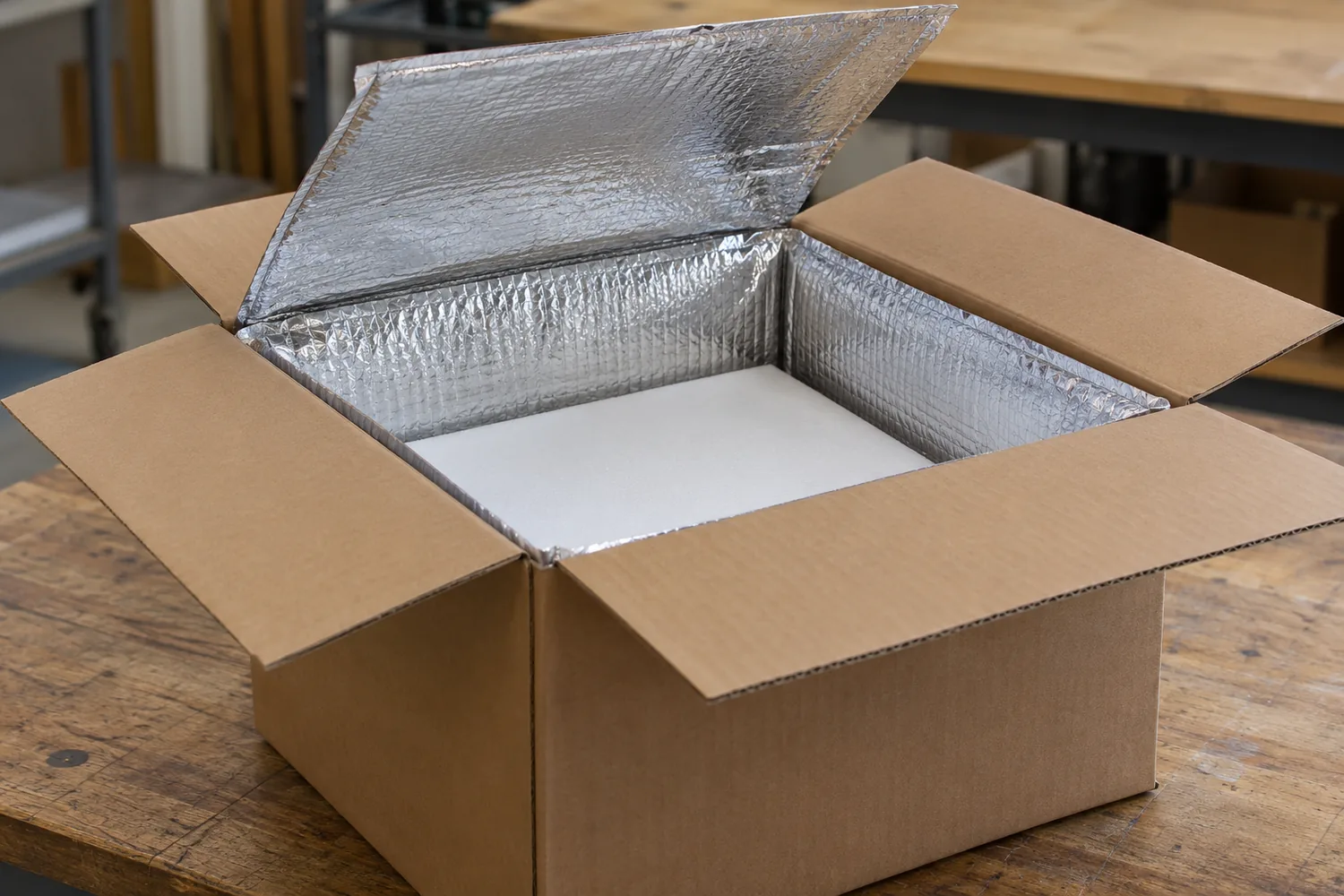
Keep the material identity, conditioning release, coolant placement, inner closure and payload configuration visible in the dispatch record. An inflation or retention check establishes a preparation condition for the specified liner; it cannot substitute for the full-pack thermal evidence.
The packout process checklist connects those records to station handoffs. When a shipment departs from its approved configuration, the cold-chain packaging troubleshooting guide helps separate assembly problems from other operating causes.
Review lifecycle changes as changes to the evidence
Reuse, repairs and material substitutions can change the configuration that a report represents. WHO section 2.1.4 discusses periodic requalification of reusable systems in light of ageing, damage and other performance losses; the review basis should also reflect operational changes.
Record inspection and replacement work, conditioning capacity, rework after assembly errors, and time spent resolving excursions. A layer that reduces storage bulk may add preparation work or require new qualification. Compare those operating consequences with the evidence needed to release the revised packout, rather than treating a material substitution as a paperwork edit.
Method and sources
This guide uses ISTA’s public 7D overview for its stated scope and limitations, its public product listing to distinguish editions, WHO Supplement 13 for qualification and change boundaries, and Peli BioThermal documentation for a named insulation-system example. The full 7D (07-22) procedure was not available in the saved public evidence; its profile numbers remain unknown. The guarded-headroom calculation is an editorial screening example with declared assumptions. These sources do not establish a qualification result for a generic inflatable liner.
Updated October 2026.