When a cold-chain pack fails, preserve the packout evidence before changing the recipe. Reconstruct what was selected, prepared, assembled and dispatched; then compare it with the approved configuration. Adding coolant immediately can hide the original error and create a second, untested configuration.
The investigation below stays within packout operations. Follow the shipment owner’s procedure for isolating affected product and assessing an excursion. A visual packaging inspection cannot release temperature-sensitive contents.
Preserve the evidence while it is still identifiable
Retain the logger file and device identity, shipment tracking, packout instruction revision and component lots. Ask for photographs of the unopened carton, inner closure and component positions as the pack is opened. Record who opened it and when. An account from memory is useful context, but keep it separate from a recorded observation.
Do not interpret a single temperature reading without the monitoring plan. Device position, activation time and the surrounding load matter. The CCT evaluation guide identifies payload and temperature-probe arrangement as variables in comparing thermal systems; use the approved arrangement when reconstructing a failure.
Use the symptom to choose the next check
The same symptom may have more than one cause. Treat this table as an investigation order, not a diagnostic verdict.
| Observed symptom | First evidence to retrieve | Packaging checks | Next decision |
|---|---|---|---|
| Pack differs from the instruction | Selection record and component identity | Seasonal variant, missing parts, unapproved substitutes | Correct selection control before repeating a trial |
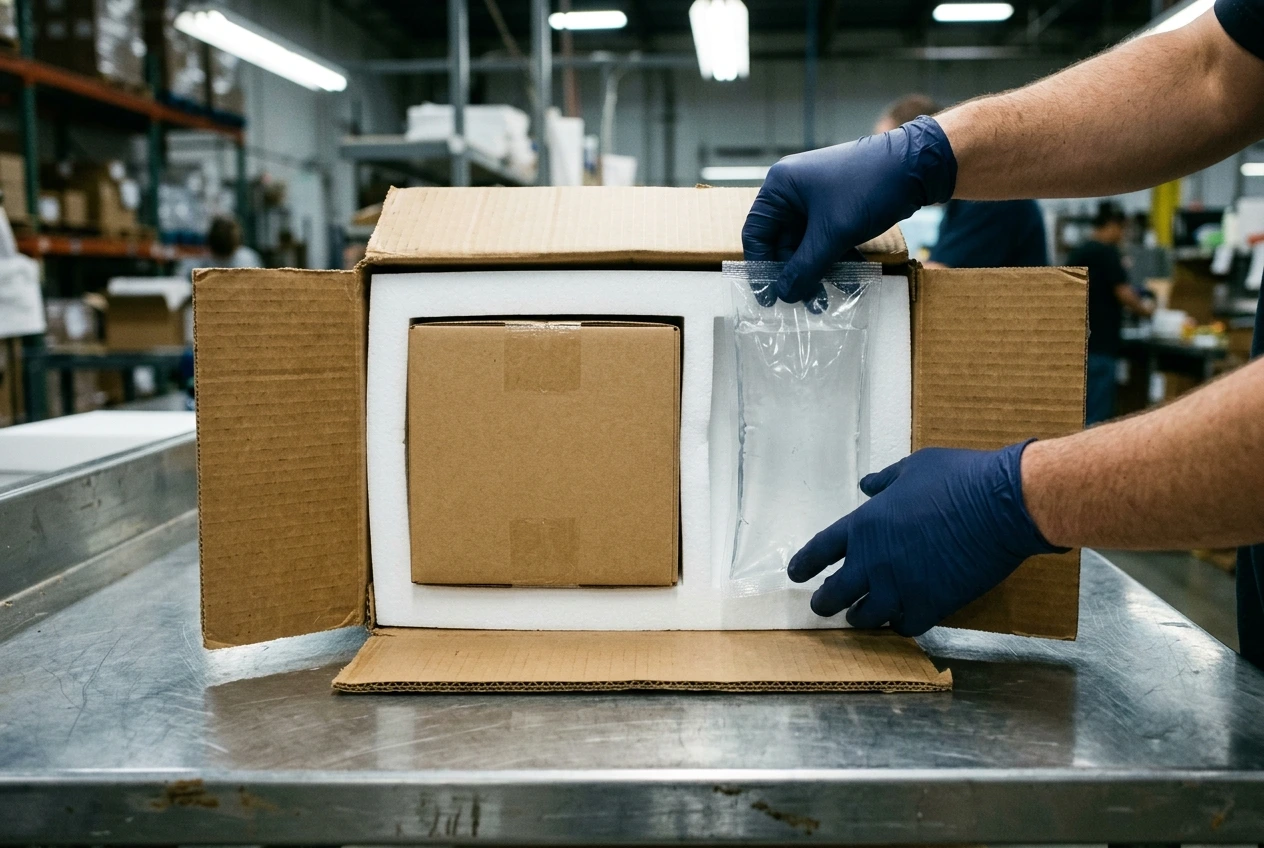
| Unexpected early low temperature | Logger location and coolant preparation history | Coolant state and proximity to the payload against the recipe | Ask the system owner to assess the configuration |
| Temperature rises late in transit | Actual timeline and route conditions | Correct quantity and arrangement, intact insulation and closure | Separate an assembly deviation from a journey outside qualification |
| One pack differs from its neighbors | Individual packout record | Missing panel, displaced coolant, damaged liner | Identify the affected process interval |
| Carton bulges or seam opens | Loaded dimensions and closure check | Payload interference and trapped liner flaps | Review fit before adjusting sealing equipment |
| Wet or weakened outer case | Unopened-pack photos and component inspection | Leaking coolant, moisture path and carton condition | Isolate damaged components and establish the source |
Inspect the places that become hidden
Open the packaging in a controlled order. Photograph the top arrangement, lift components without mixing them, then inspect the bottom and corners. Compare each finding with the packout drawing. Record a gap as a location and size measured on that pack, rather than calling the entire liner defective.
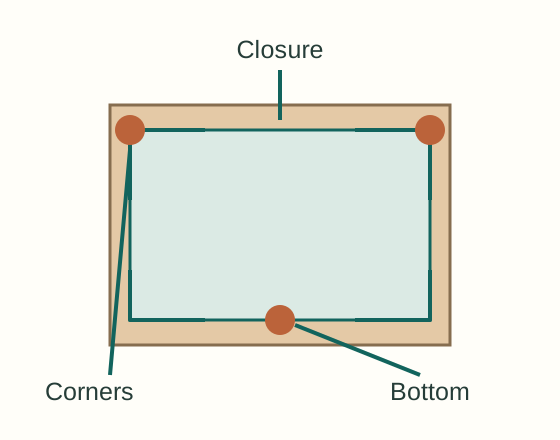
A compressed corner may come from poor liner insertion, excessive payload or handling damage. Check the incoming component and a retained acceptable sample before choosing between them. Avoid trimming insulation or moving coolant as an improvised repair.
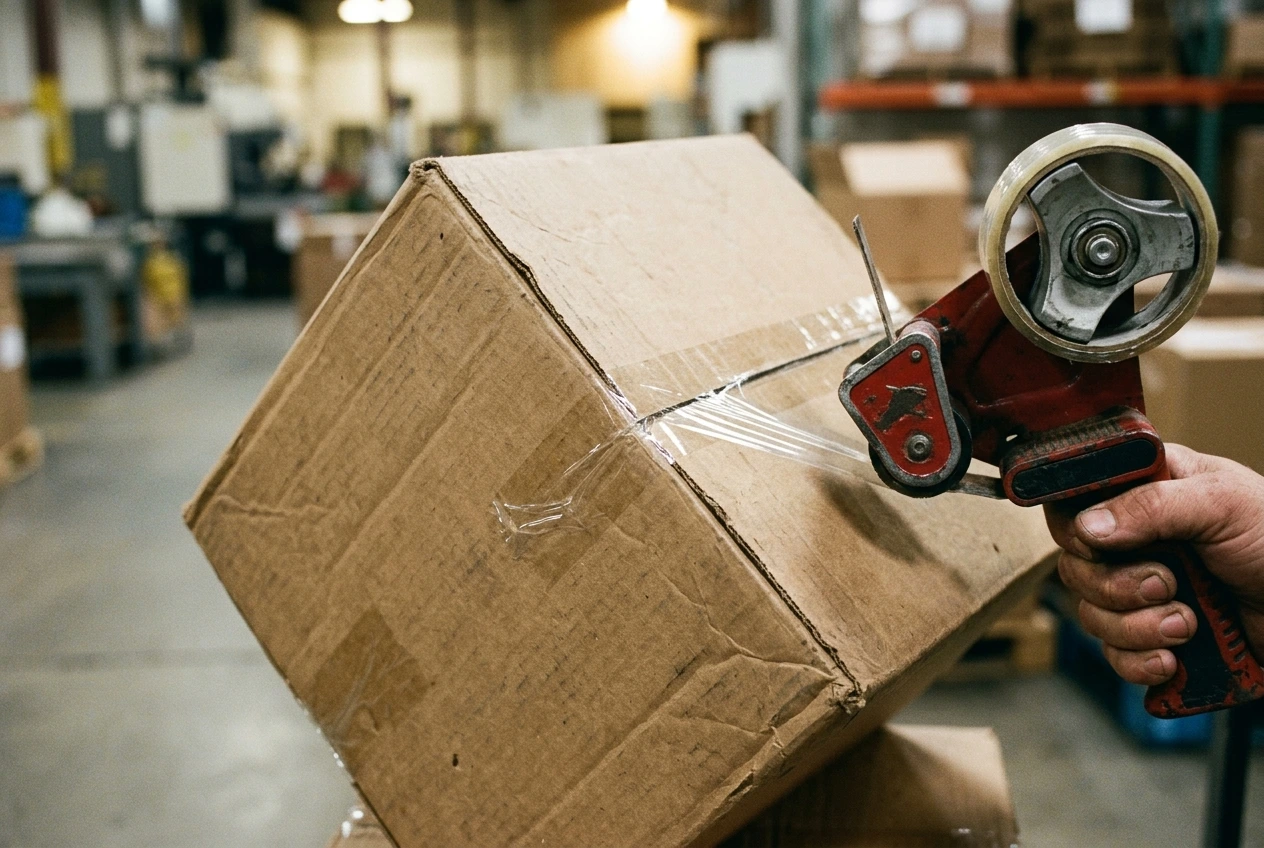
Outer tape can still look intact when an inner flap was never closed. Conversely, a damaged carton does not establish that thermal performance failed. Keep physical findings beside the temperature history so the investigator can assess both.
Separate station errors from a changed journey
ThermoSafe’s qualification discussion emphasizes the limits of a test profile in representing a real lane. Compare actual carrier delays, staging and destination exposure with the qualified assumptions. If the packout matches but the journey differs, the packaging owner may need a new configuration or additional qualification. That decision needs the actual route data.
For an assembly deviation, define a corrective action that can be observed: component presentation changed, selection rule corrected, or a closure check moved before tape application. Assign an owner and verify the next representative run. Retraining alone is incomplete if the station still allows two look-alike components to be mixed.
Prepare a usable investigation handoff
Send the investigator the shipment ID, approved configuration, observed deviation, temperature file, timeline and component evidence. State what remains unknown. Keep suspected cause, confirmed cause and action taken in separate fields. Use the normal-run checklist to decide where an earlier check would have caught the error.
Method and sources
The symptom table is an editorial fault-isolation aid. It draws on the packout and qualification variables described by Cold Chain Technologies and ThermoSafe. It does not identify a failure mechanism from temperature shape alone, replace a product excursion assessment or prescribe repairs to refrigeration equipment. Illustrations show generic components and inspection locations, not a documented failed shipment.