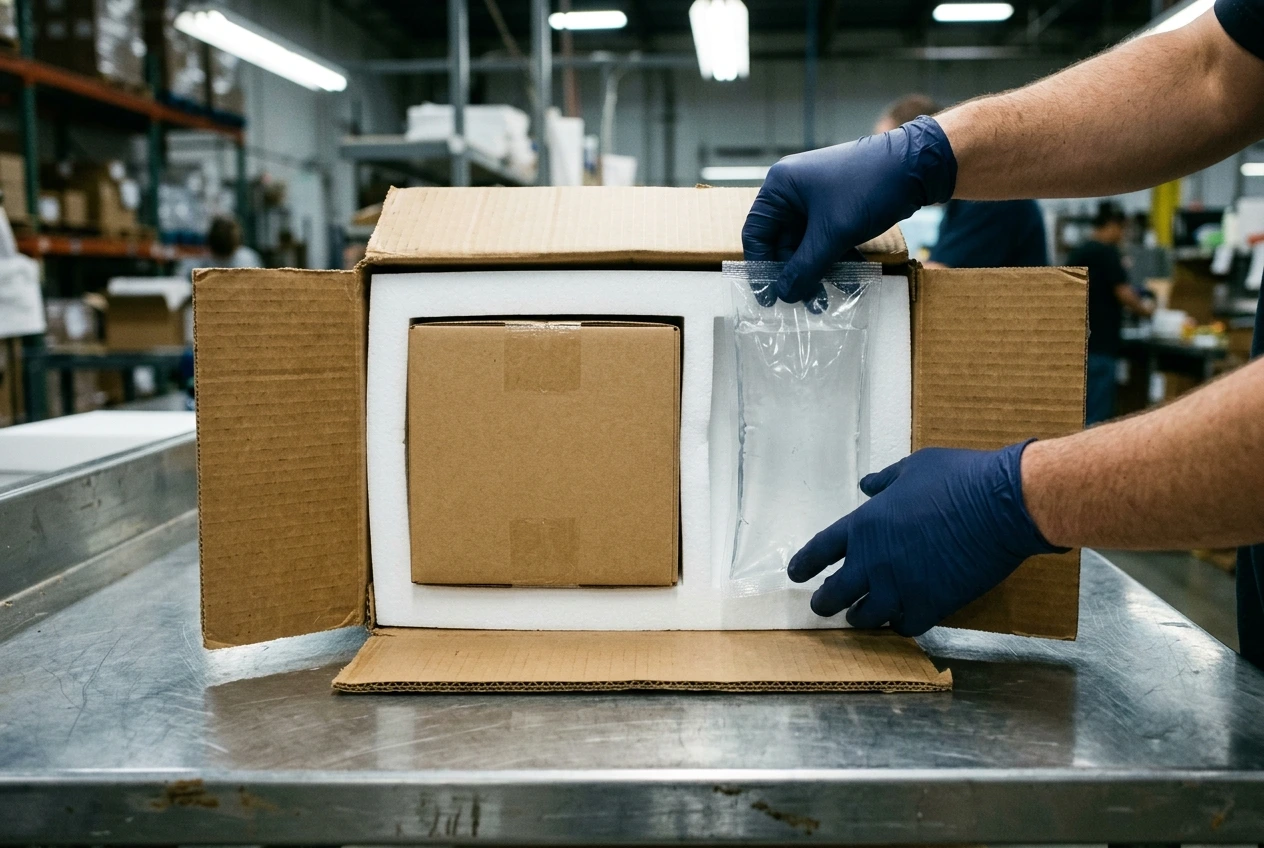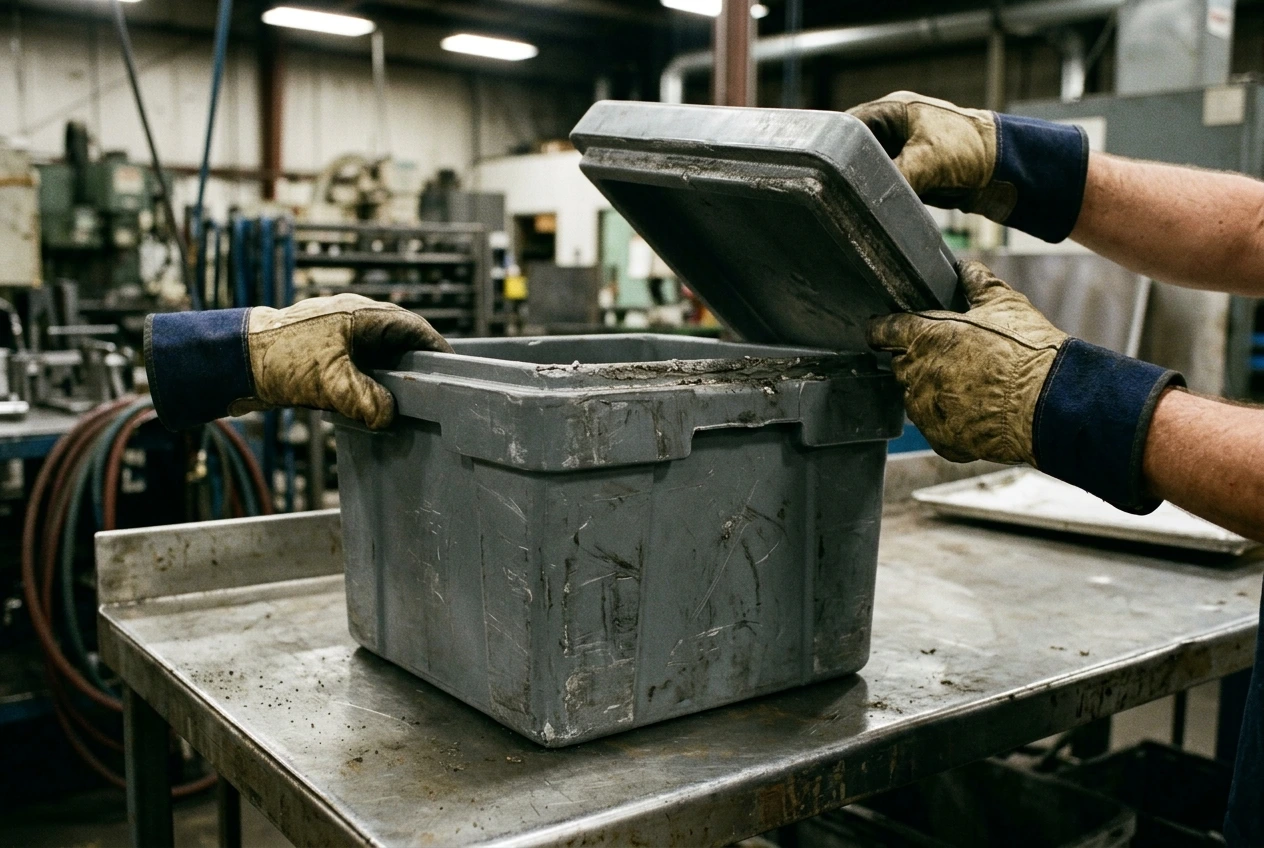
A returned insulated container is incoming material until it has passed the reuse process. Keep it out of ready-to-pack stock, identify its components and carry its inspection status through cleaning, refurbishment and conditioning. Reuse only the combination released under the packaging owner’s procedure.
This guide examines the handoff back into packout automation. It does not set cleaning chemistry, allowable damage or a number of reuse cycles. Those limits depend on the particular container and its components.
Give returned units their own receiving route
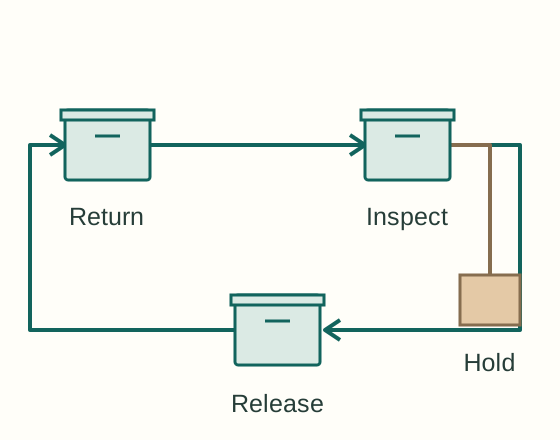
A fleet needs more statuses than available and missing. At minimum, distinguish received, awaiting assessment, in process, held and released. Your system may need more detail, but an operator should be able to recognize whether a unit can enter the packing line without opening another person’s spreadsheet.
Read the unit identity before separating the lid, insulation and coolant. If components carry their own identifiers, preserve the relationship required by the owner’s system. An unidentified lid that happens to fit is not evidence of an approved combination.
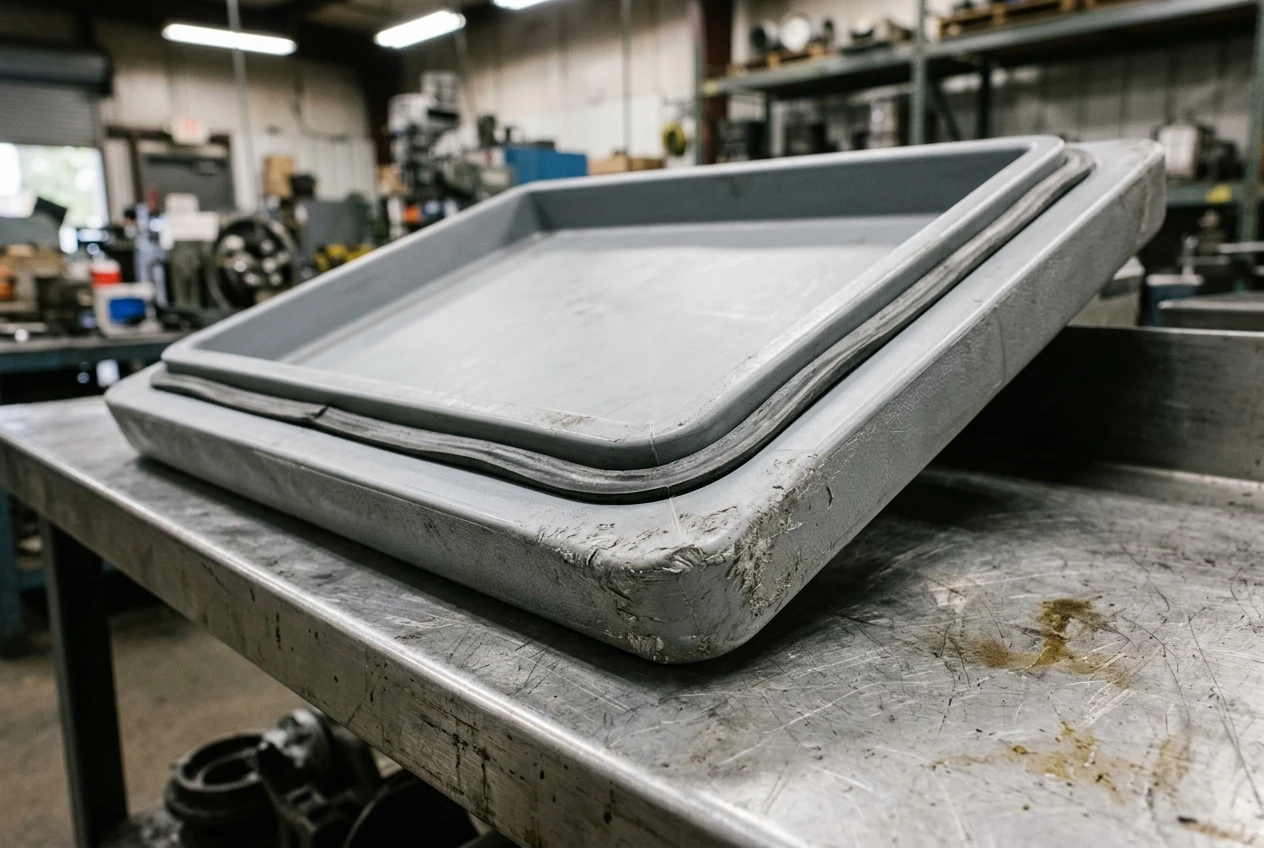
The damaged rim in this example is a reason to hold the container for assessment. It is not a visual standard for accepting or rejecting a particular manufacturer’s product. Obtain the actual damage limits and refurbishment instruction.
Build a release traveler around the real process
ThermoSafe describes return, inspection, refurbishment and redeployment in its Orion rental service. That establishes the separation of activities; it does not give a cleaning procedure for another reusable shipper. Use the following suggested traveler to make responsibilities explicit.
| Record field | What to enter | Why it follows the unit |
|---|---|---|
| Identity and receipt | Unit ID, components present, date and previous shipment reference | Reconnects returned hardware with its use history |
| Initial condition | Visible damage, residue, moisture or missing components | Prevents an unresolved unit entering usable stock |
| Treatment reference | Approved cleaning or refurbishment instruction and completion evidence | Identifies the process actually applied |
| Inspection result | Component checks against the owner’s limits | Supports release or a documented hold |
| Component replacement | Approved part identity and work reference | Preserves the released configuration |
| Conditioning status | Coolant identity and preparation record where applicable | Separates clean hardware from ready thermal components |
| Release | Responsible role, disposition and destination stock location | Establishes the next permitted operation |
Requalify the handling assumption at the station
A reused outer container may reach the line in a different condition from a new one. Trial representative released units with the actual opening, orientation, support and closing method. Check whether worn but acceptable surfaces affect feeding or sensing. Do not modify a rim or add adhesive to make equipment accept a unit without the packaging owner’s approval.
The cleaning route can also change availability. Count units awaiting work separately from released units when planning the shift. Returned stock does not become production capacity simply because it is physically on site.
Keep coolant preparation separate from container release
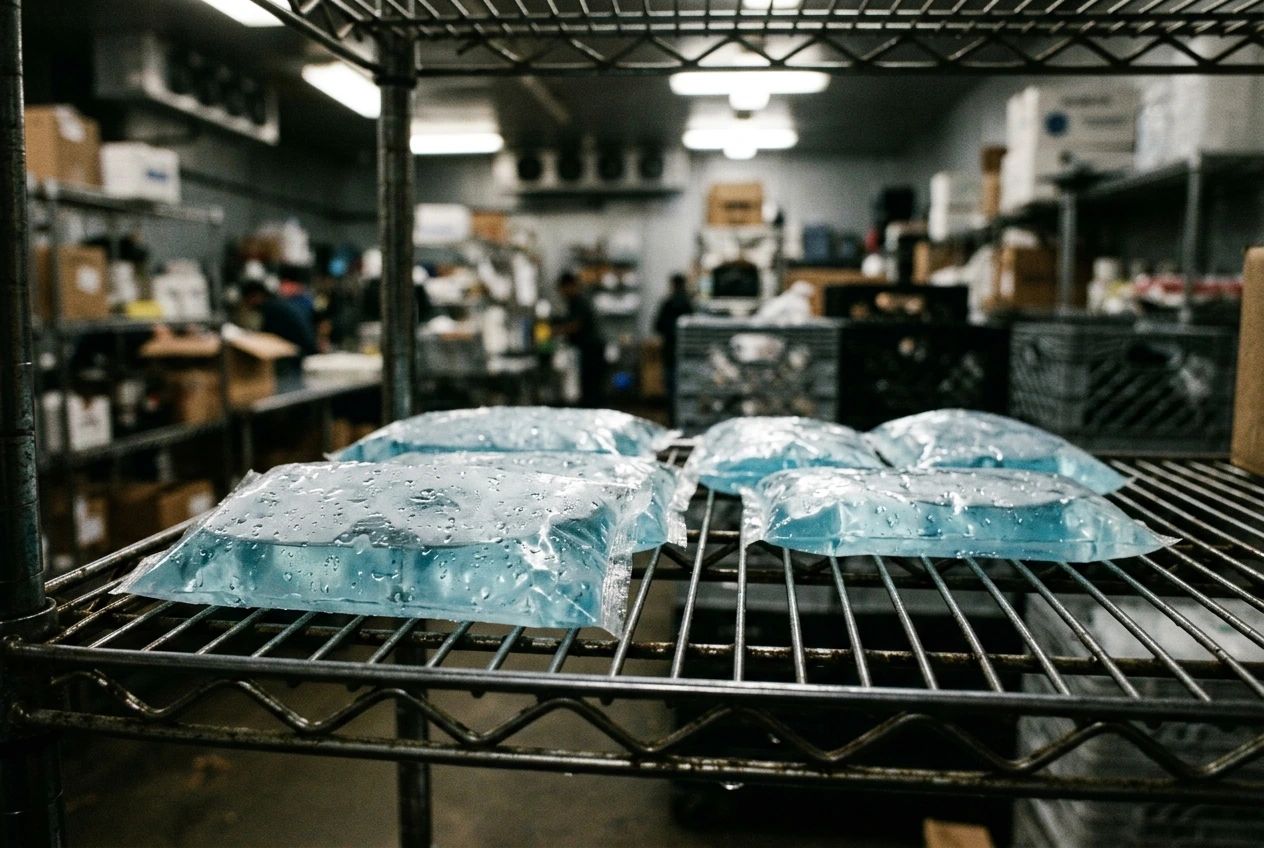
A clean, inspected shell and a conditioned coolant set have different release evidence. Bring the records together at packout selection. CCT’s guide explains that conditioning sequences can include more than one step; use the current sequence for the selected system instead of treating all coolant as interchangeable frozen stock.
If an operator takes a unit out of the ready lane, give it an explicit hold location. Otherwise the next shift may interpret a partly assembled container as prepared inventory.
Decide whether the return loop is workable
Before expanding a reusable program, collect your own return yield, turnaround distribution, cleaning workload and replacement consumption. Include units in transit and held for inspection. Avoid estimating usable fleet size from an average trip alone when slow returns can leave a packing shift short.
Define who owns the return path, treatment, release and exceptions. A rental provider may own some of those activities; an internally managed fleet must assign them. For the outgoing work sequence, use the packout checklist alongside the traveler.
Method and sources
The return traveler and station checks are editorial recommendations, informed by ThermoSafe’s documented rental-process stages and CCT’s packout-preparation guidance. They make no savings, environmental benefit, cleaning-efficacy or service-life claim. The generic container photograph shows inspection access and visible damage, not an approved reusable model or evidence that a unit has passed refurbishment.